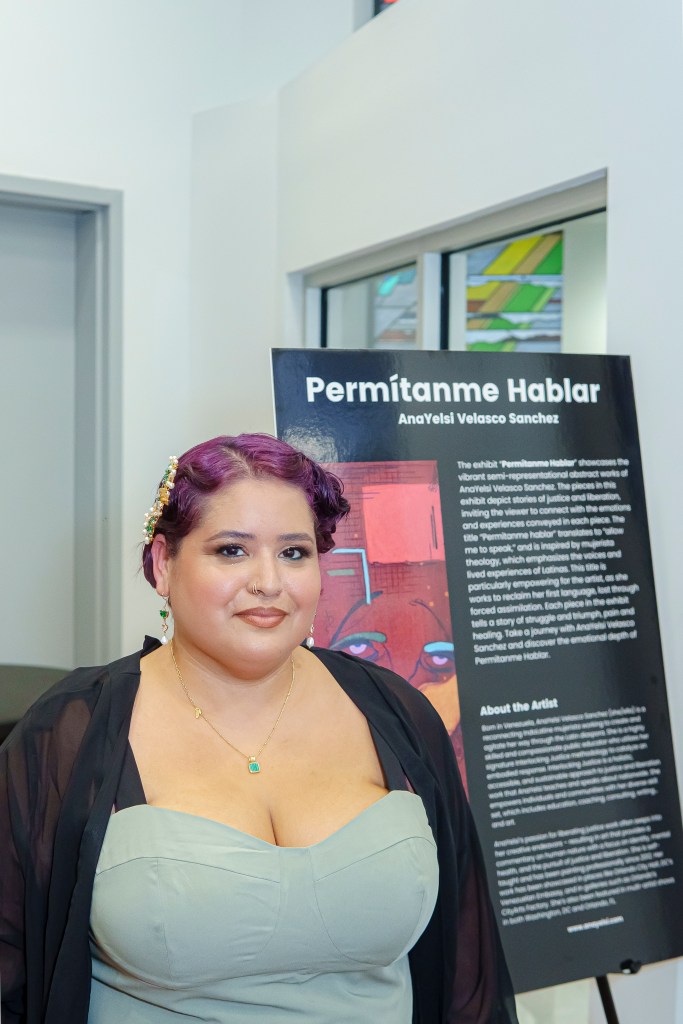
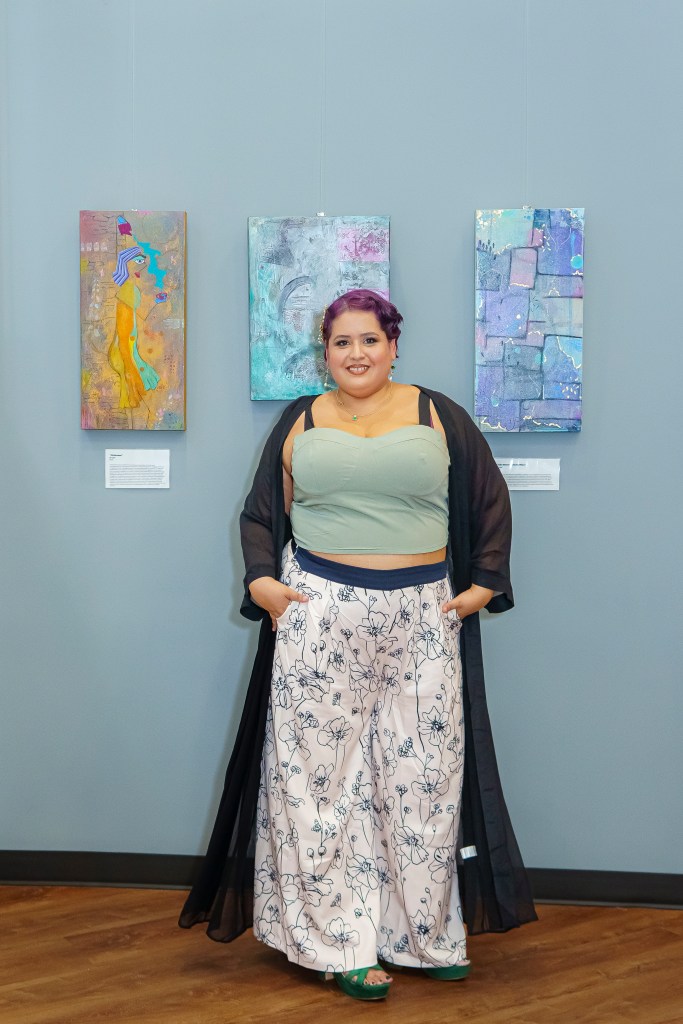
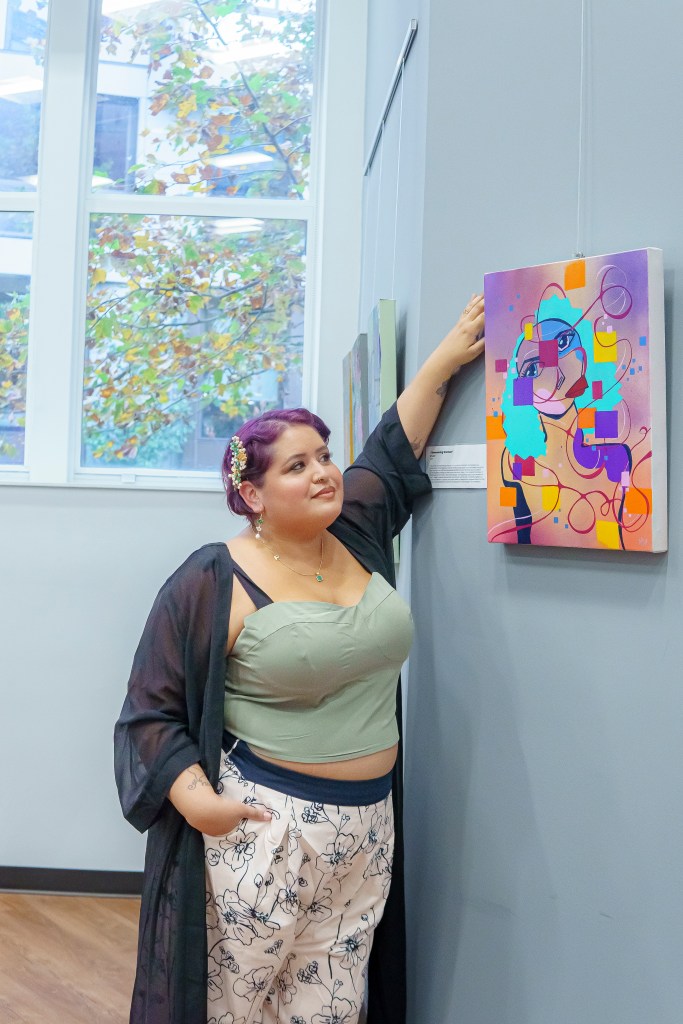
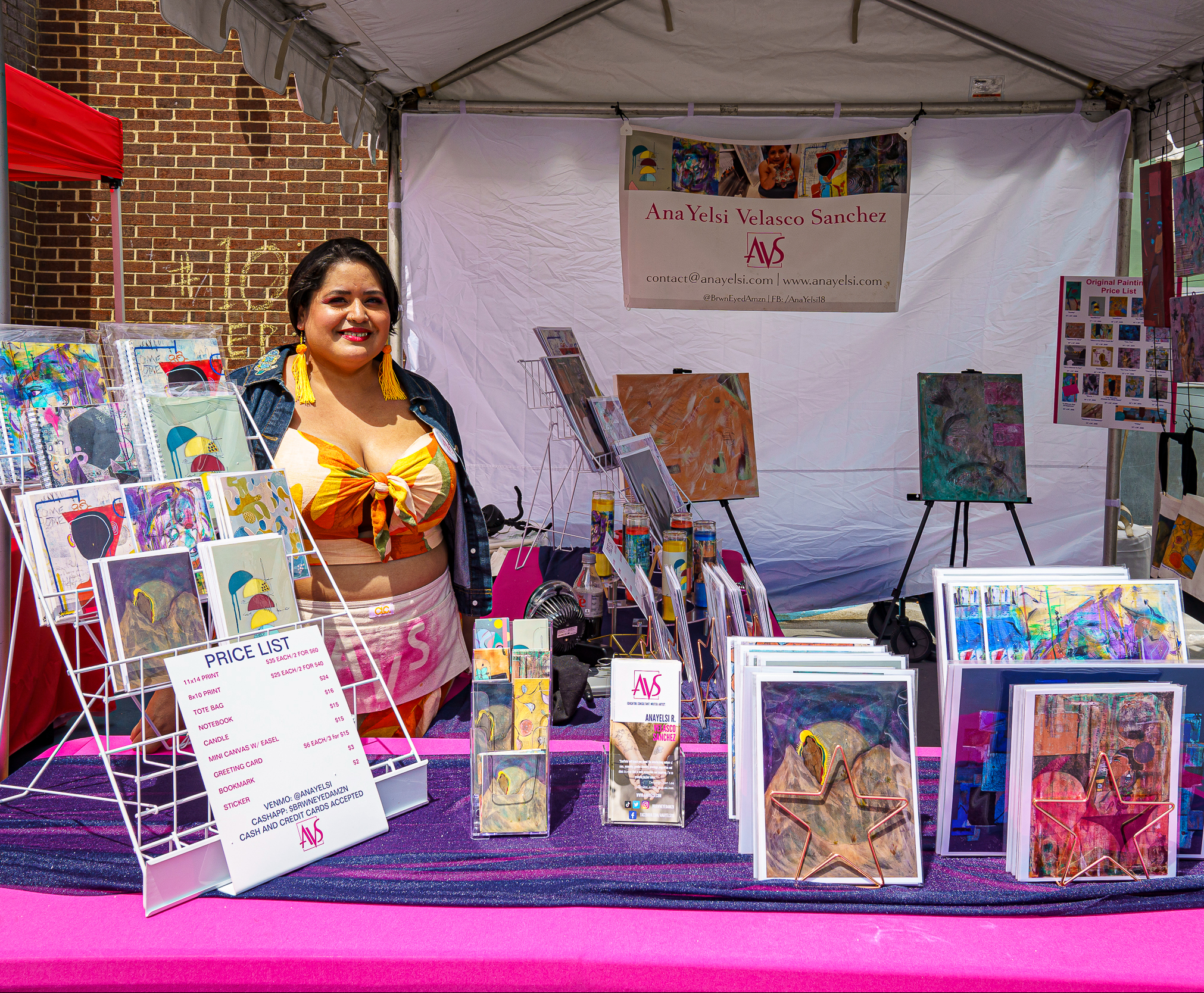
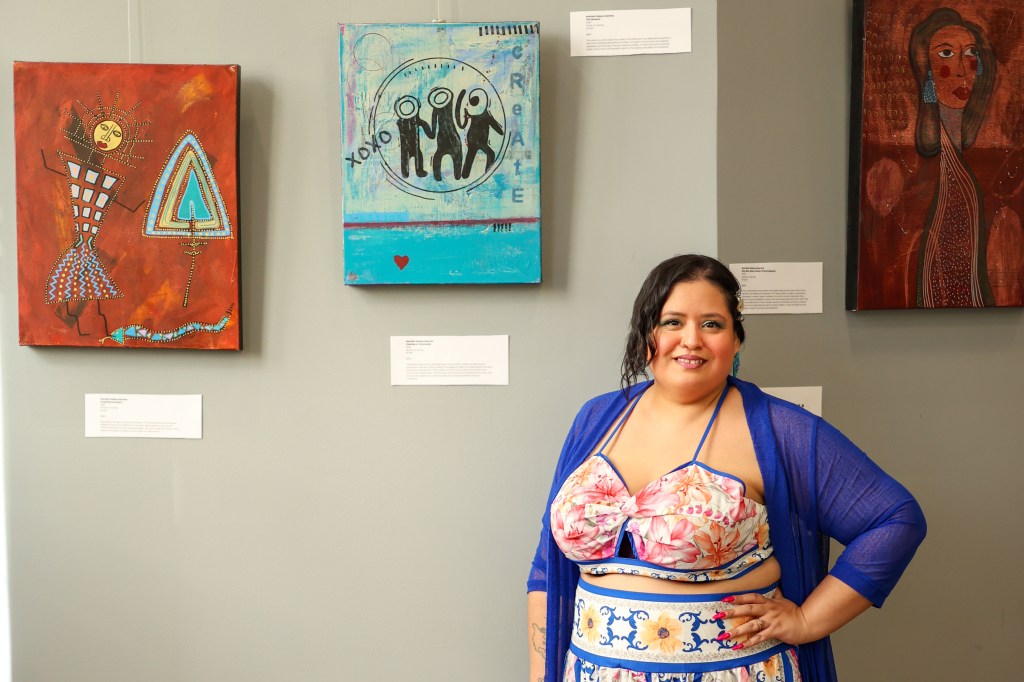
I’m AnaYelsi Velasco Sanchez, a Venezuelan-born artist based in Washington, D.C. My work lives at the intersection of justice, liberation, mental health, and identity. I use vibrant color not just as a visual choice, but as a form of resistance and healing. Whether I’m working in abstraction or portraying the human figure, my art is a space for reflection, dialogue, and transformation. I’m self-taught and have been painting professionally since 2012. Over the years, my work has been featured at places like Orlando City Hall, The Martin Luther King Jr. Memorial Library, the Venezuelan Embassy, and galleries including DC’s Festival Center, Orlando’s CityArts Factory and DC’s Dupont Underground. I currently serve as the in-house curator for the Festival Center’s art gallery.
Through every piece I create, I aim to invite others into a conversation about the world we live in—and the one we can build.
Available For Purchase
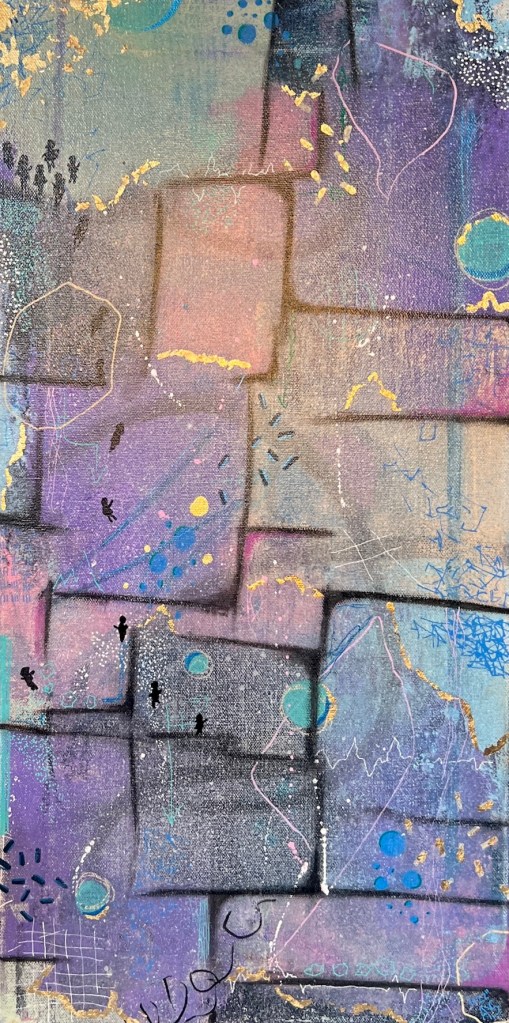
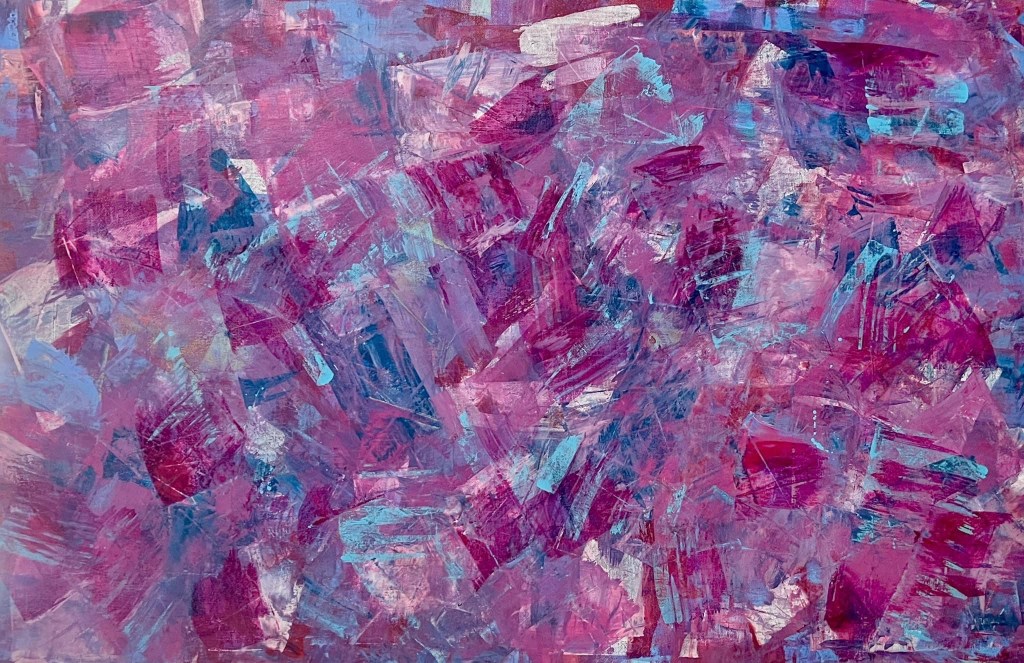
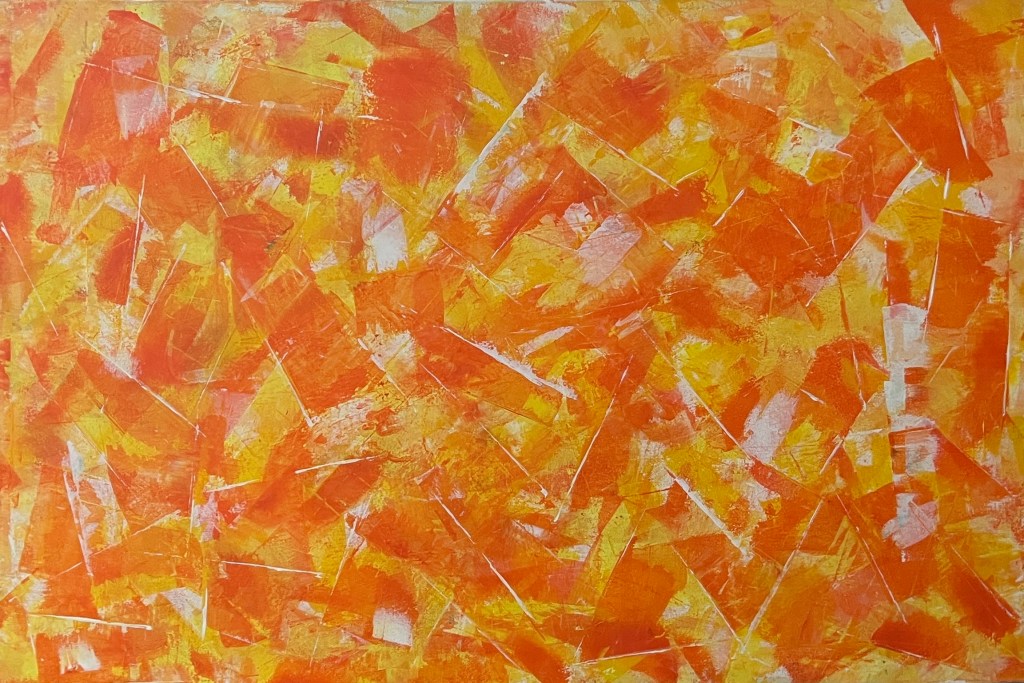
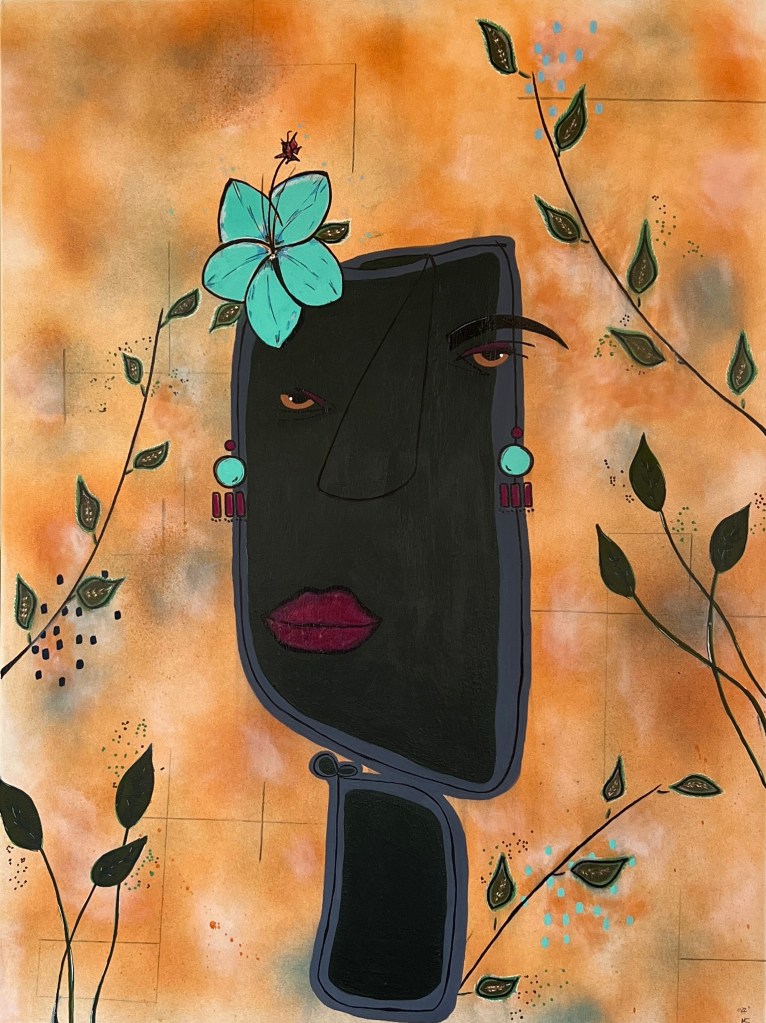
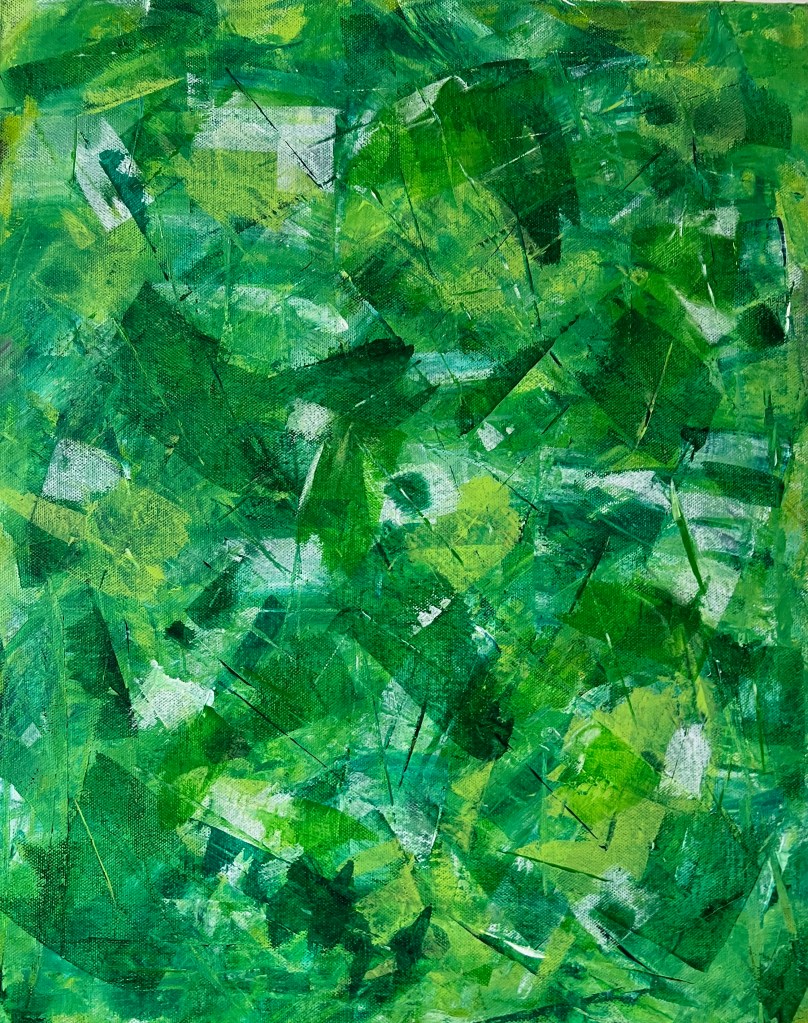
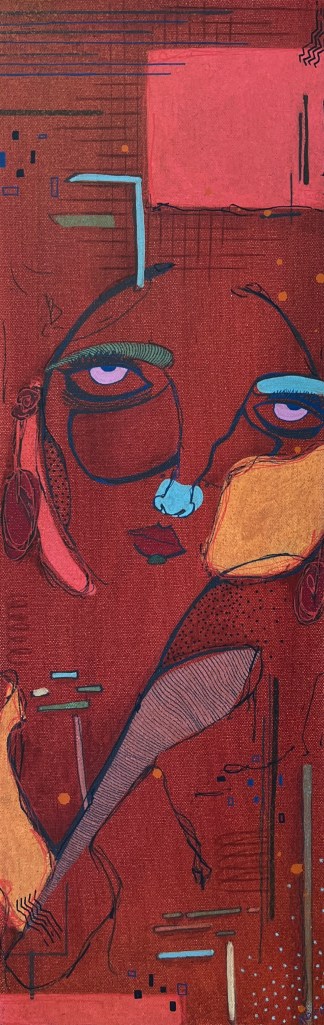


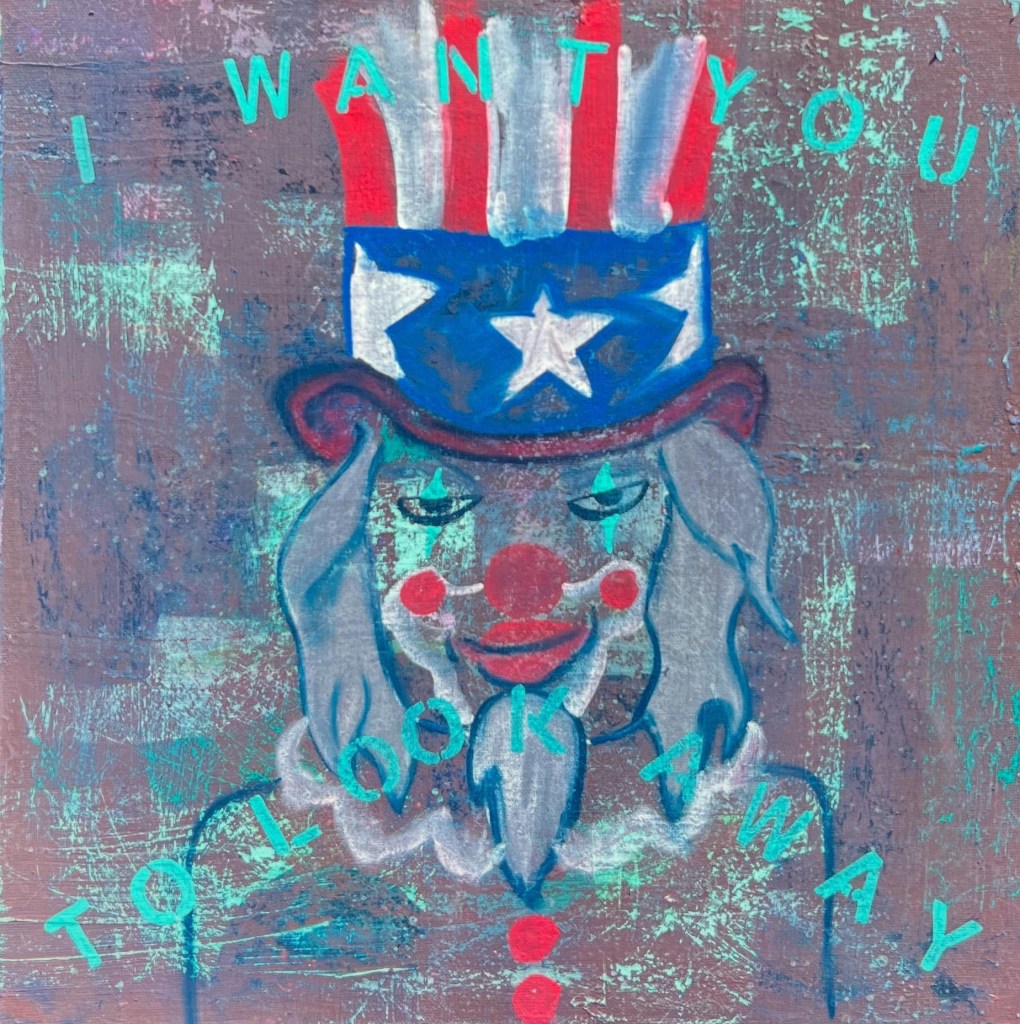
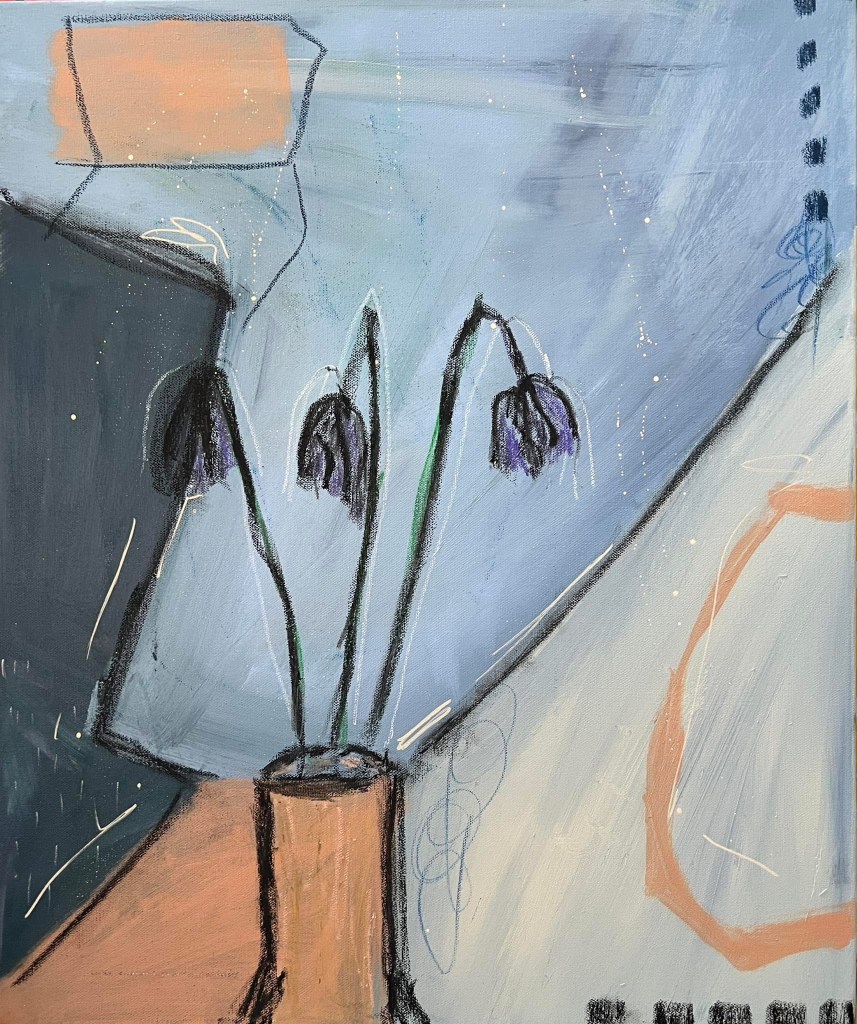
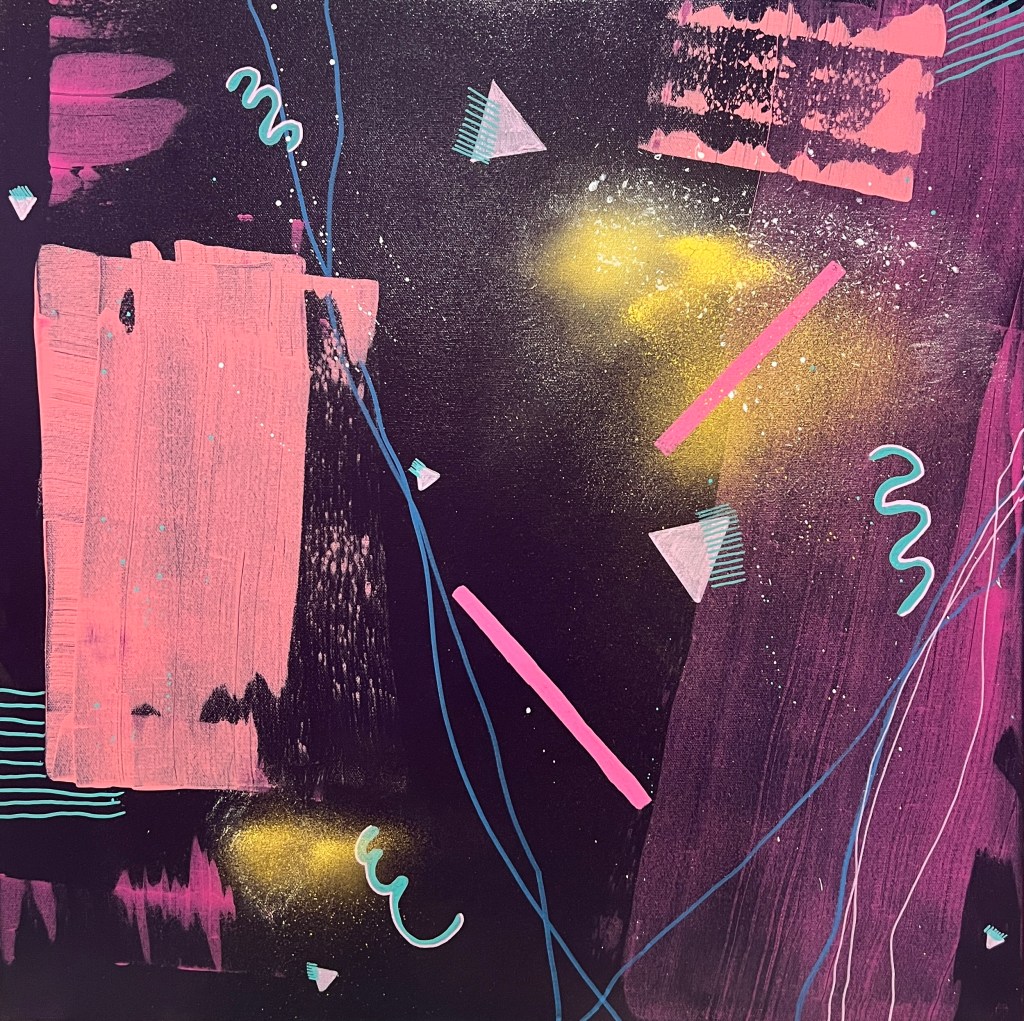
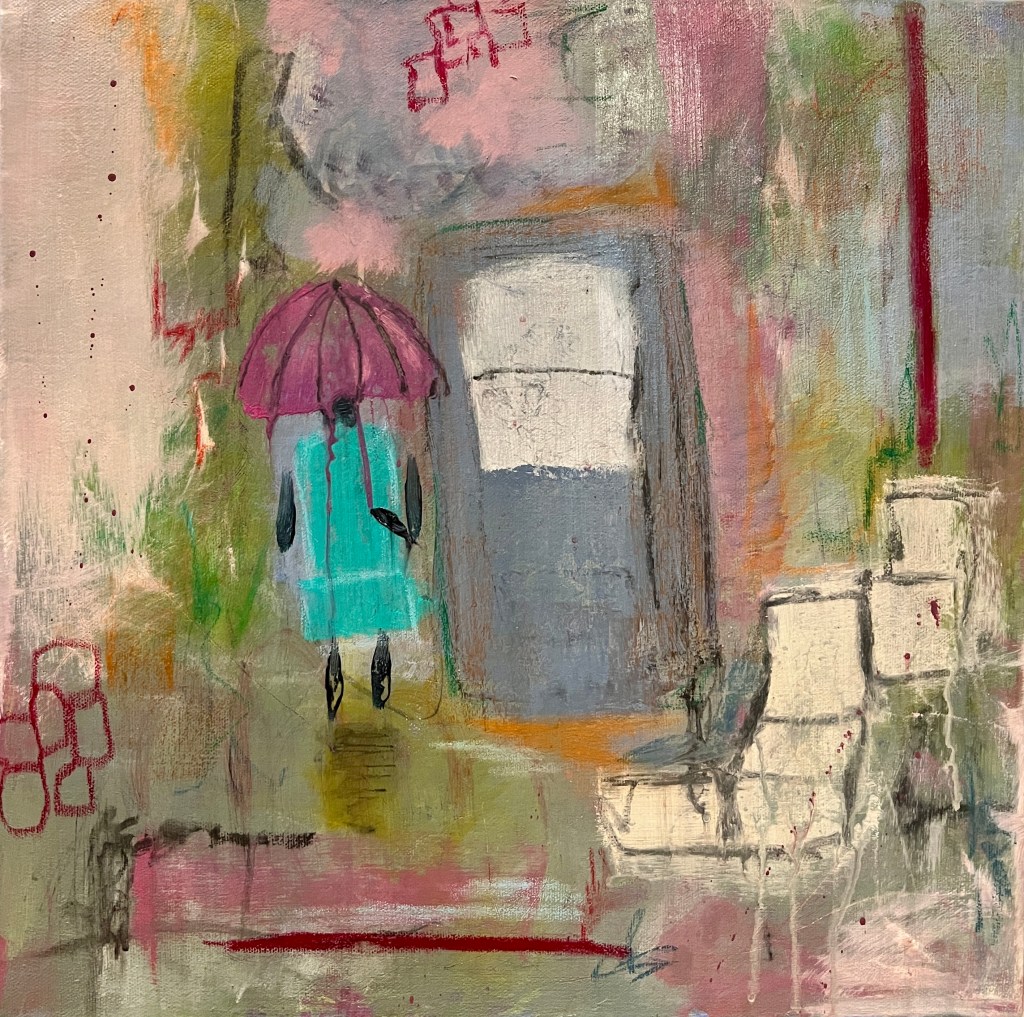
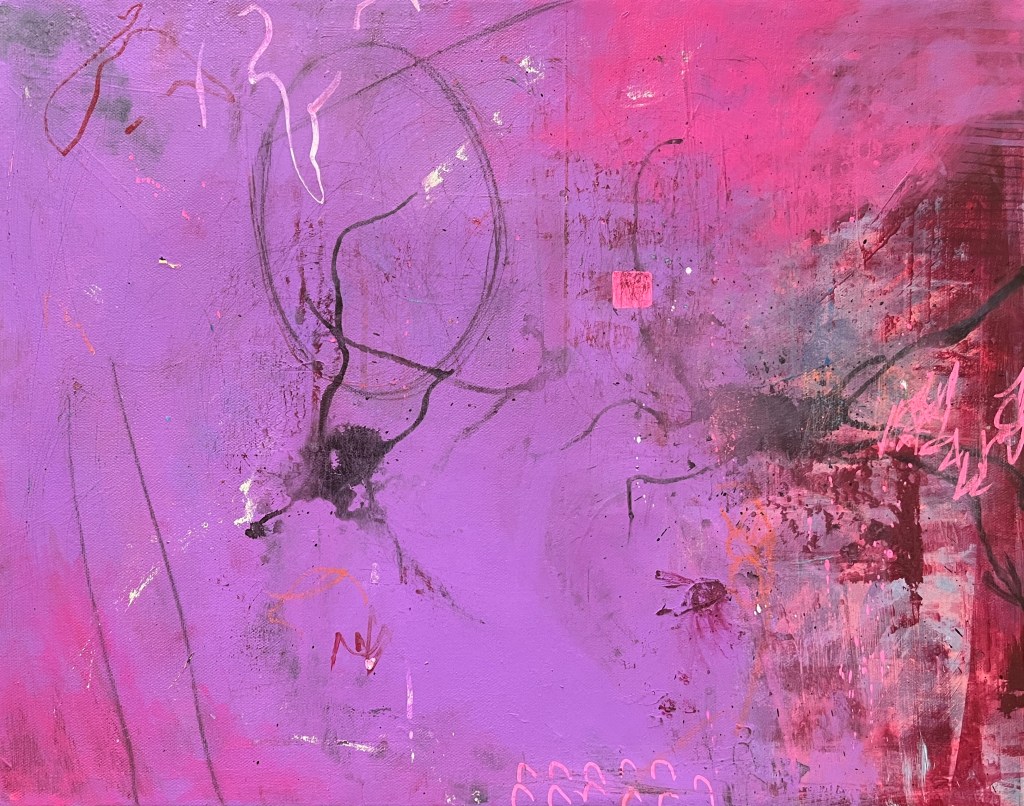
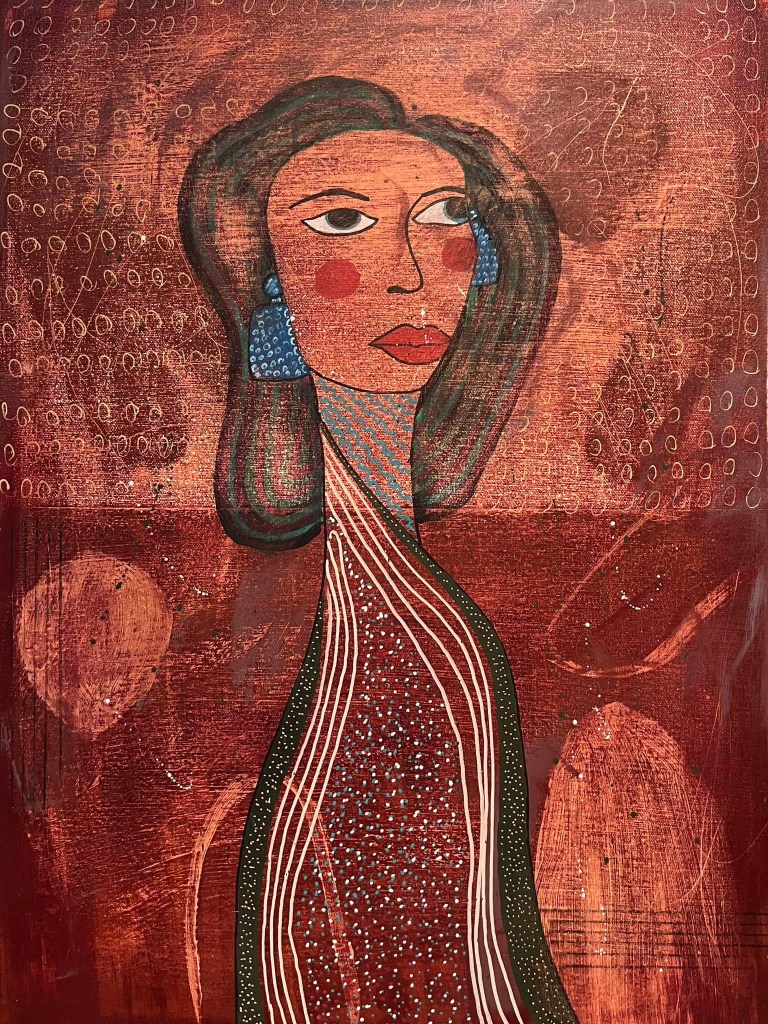
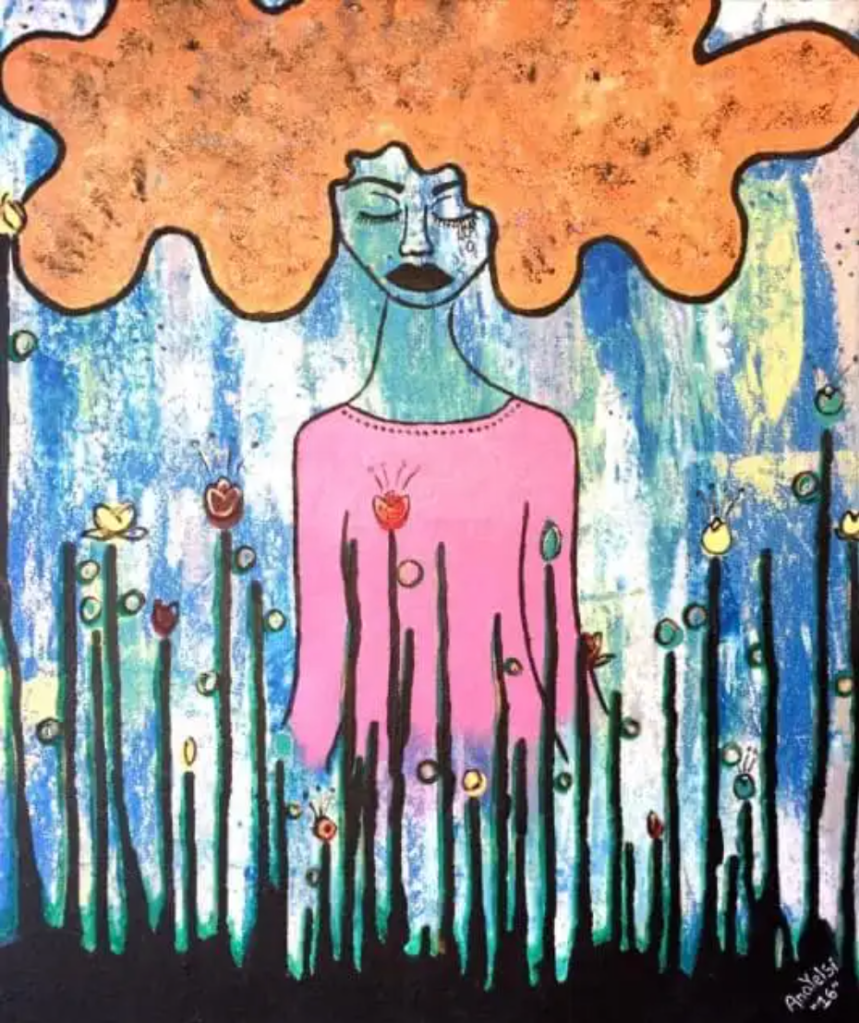
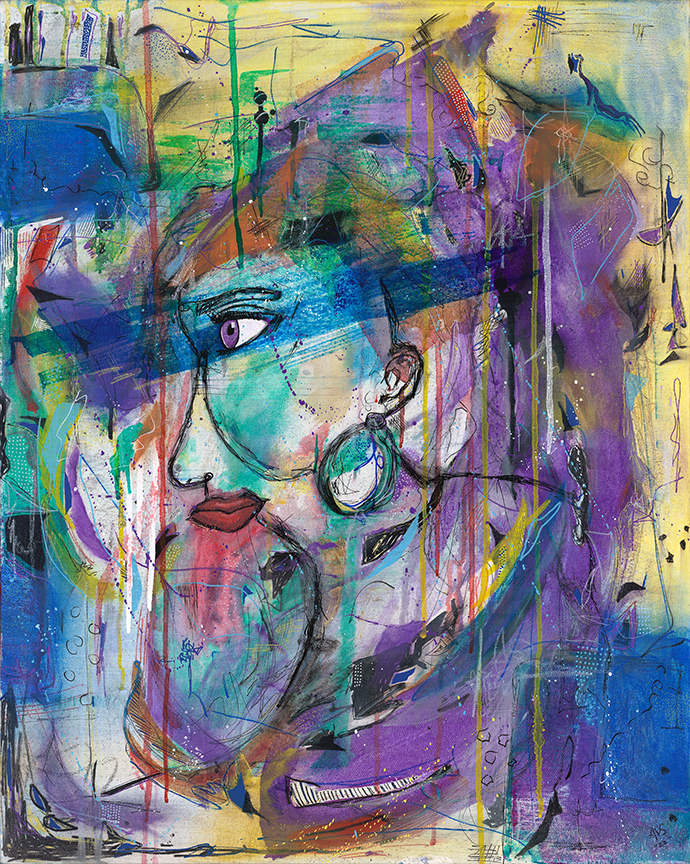
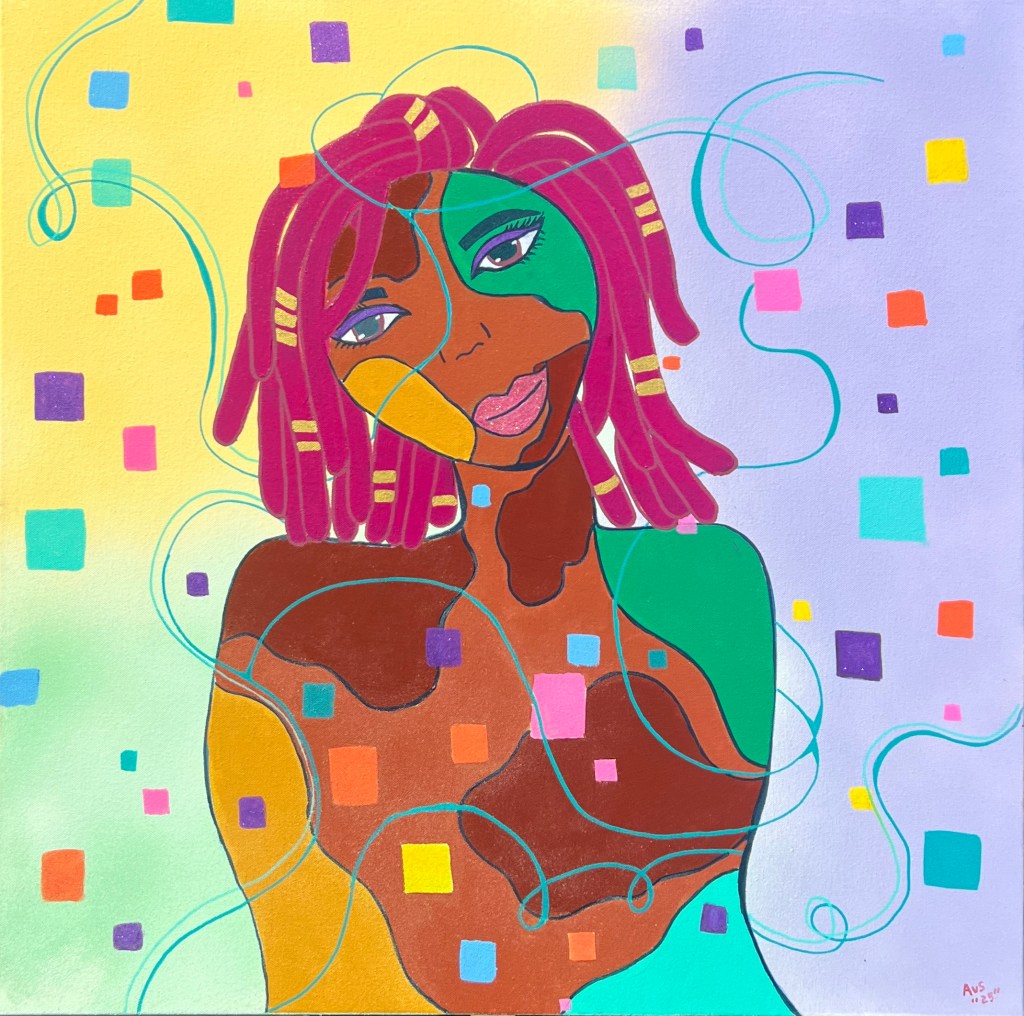
This is a declaration that women of the global majority were never meant to live beneath the shadow of comparison. Their beauty does not begin at proximity to whiteness, nor does it require validation through Eurocentric standards. Every feature they carry speaks to a beauty that has always existed fully within itself. They exist as reflections of culture, lineage, resilience, tenderness, and divine intention. Their non-European features were not flaws to soften or erase, but gifts from the Creator, worthy of reverence and celebration.
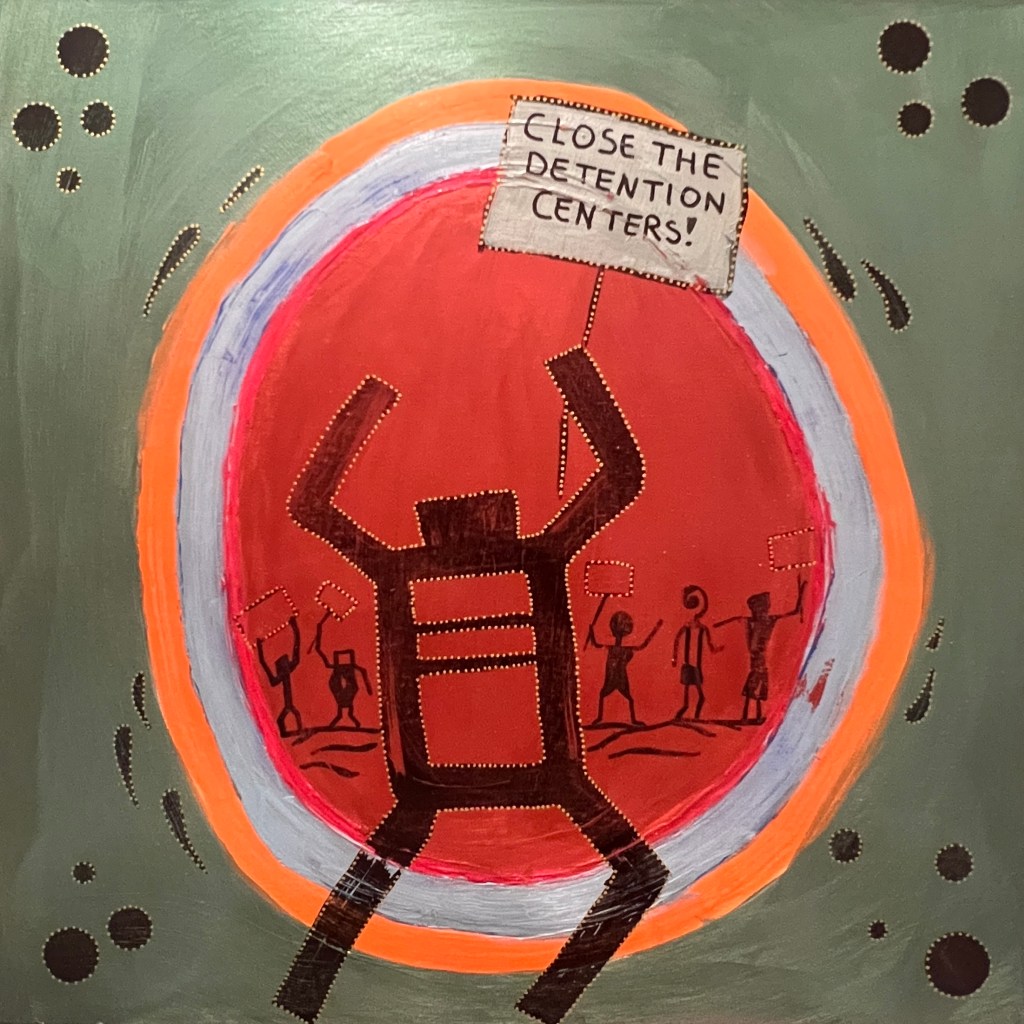
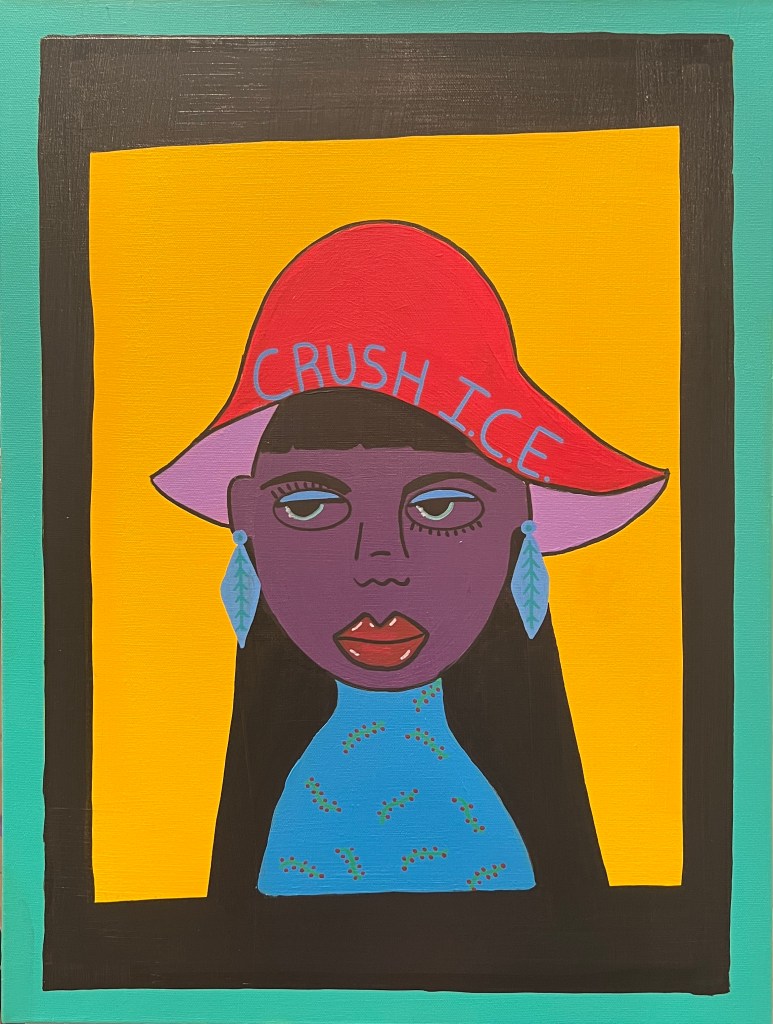
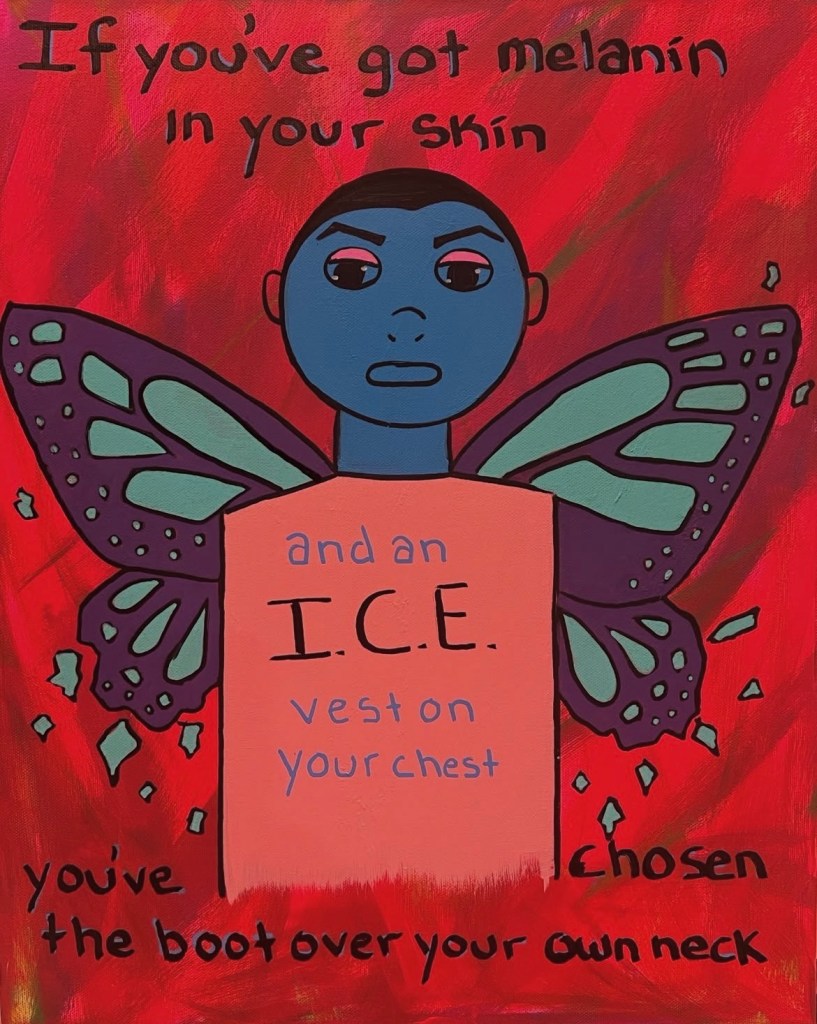
This piece is a call to resist the cruelty of ICE detention and deportation policies. It asks what solidarity demands of us when immigrant communities are targeted, separated, and harmed. Through collective protest, it insists that justice requires public action and a willingness to fight for the dignity and safety of immigrants.
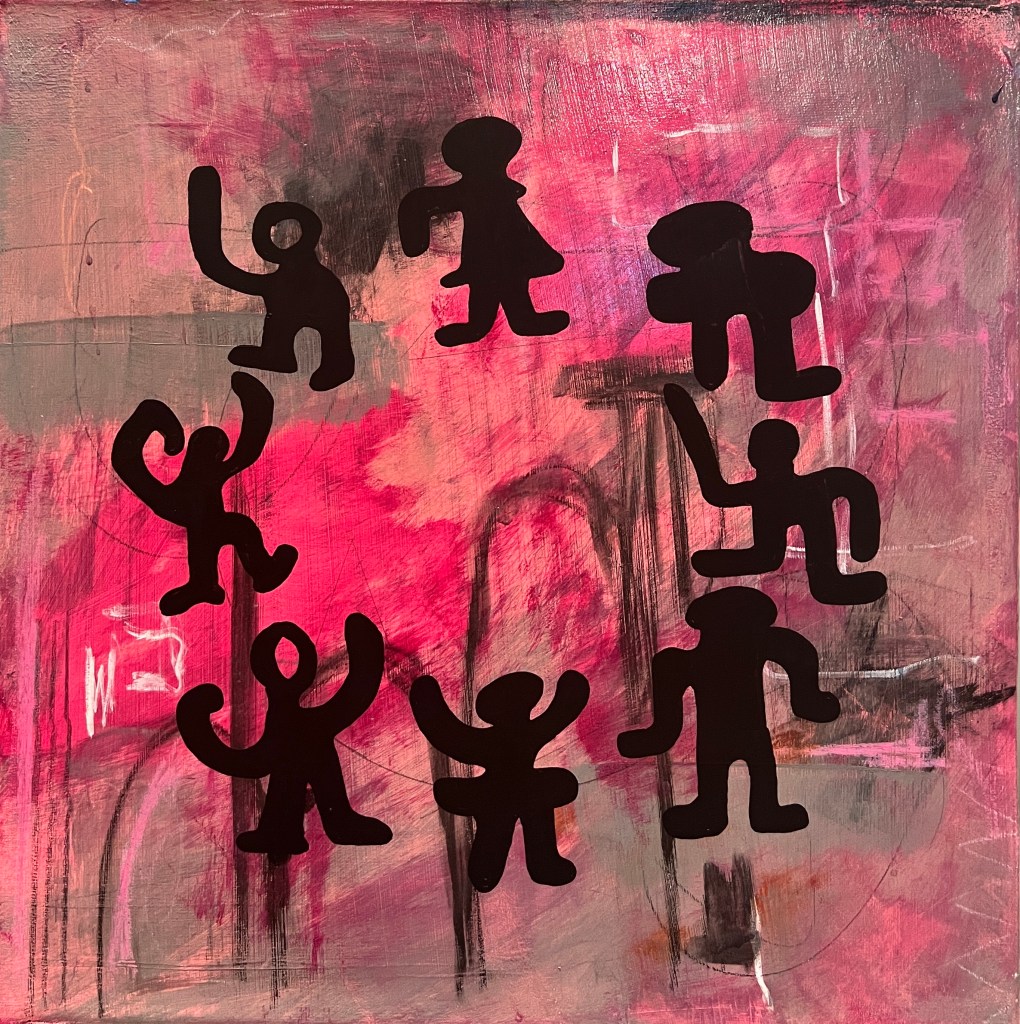
A group of people forms a circle with their bodies, holding space for one another in a shared configuration of care. The work reflects the understanding that individual healing cannot be separated from collective healing, and that personal well-being is bound to the health of the world around us. It points to restoration as something that happens through interdependence, where people are responsible to and shaped by one another.
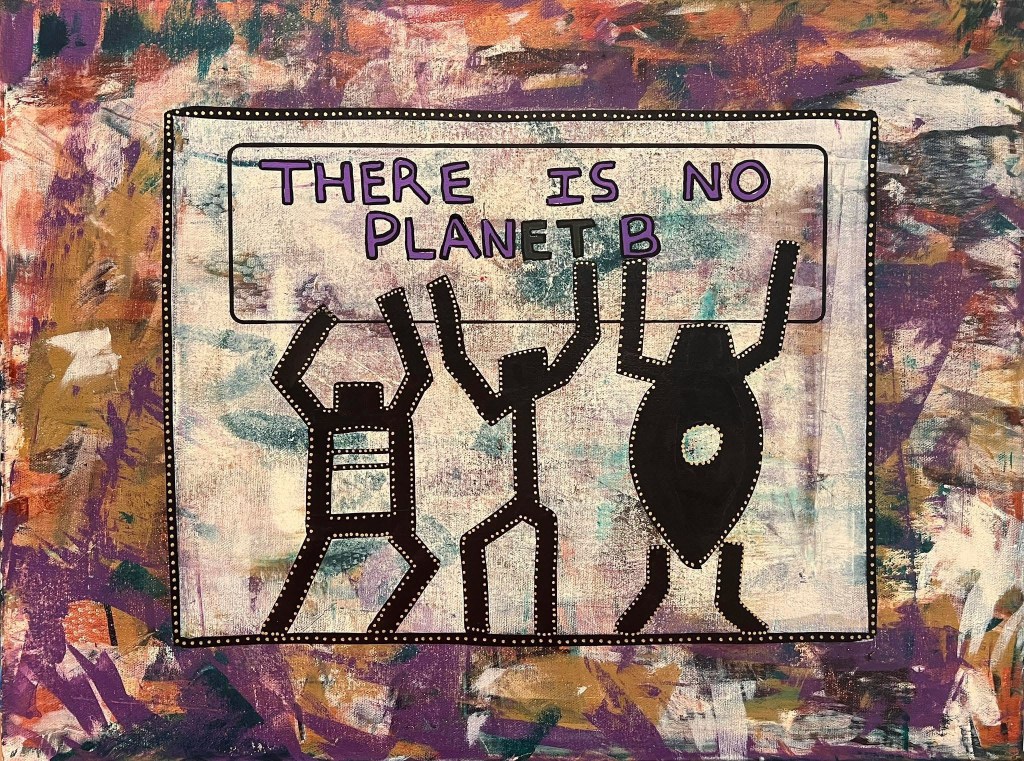
A call to collective responsibility, One Chance centers climate justice as a shared human concern. Figures lift a sign declaring “There Is No PLANet B,” reminding us that care for the earth is inseparable from care for one another and the futures we are shaping together.
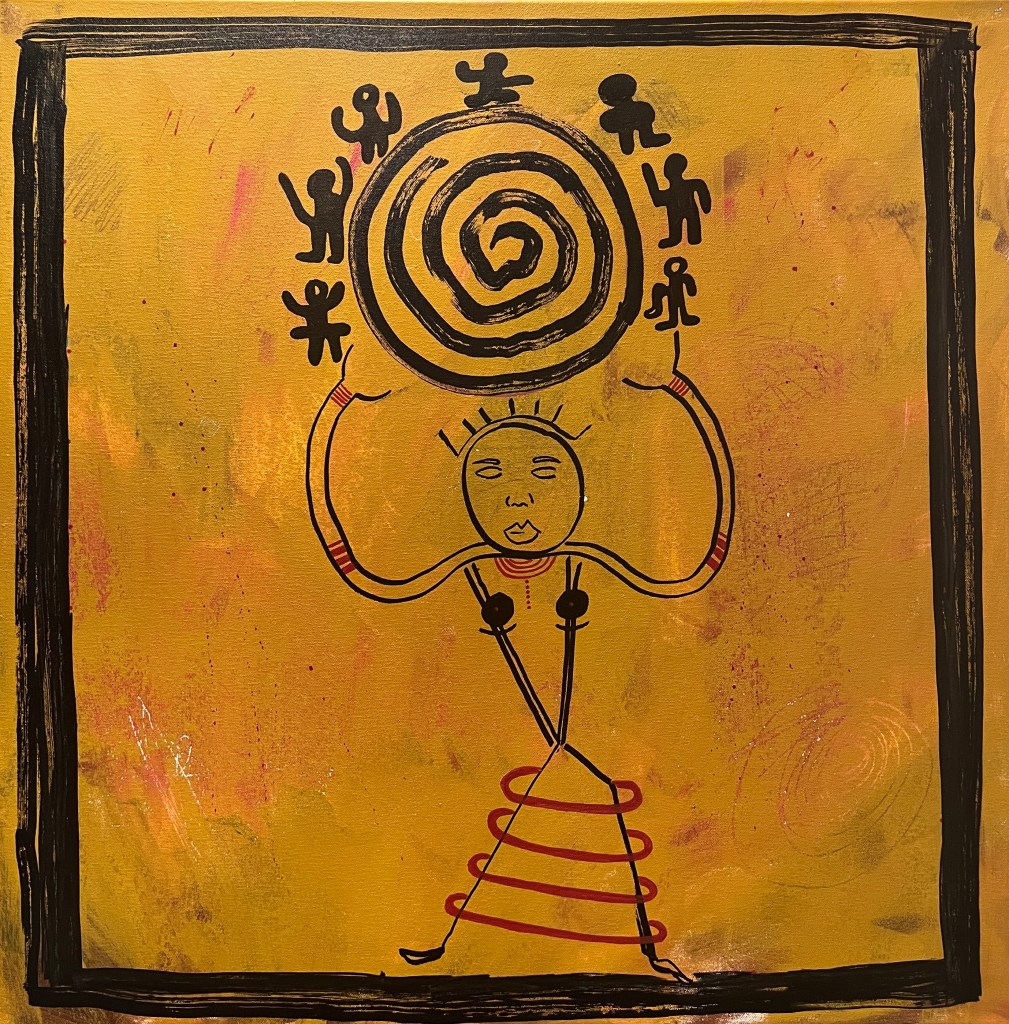
This woman holding up the world honors the unseen labor of women everywhere; the caretakers, protectors, healers, and builders who continue to nurture life despite brutality, hatred, and misogyny. It reflects the quiet resilience required to carry communities, families, and futures while enduring systems designed to diminish them. Even beneath immense burden, her strength remains sacred and transformative.
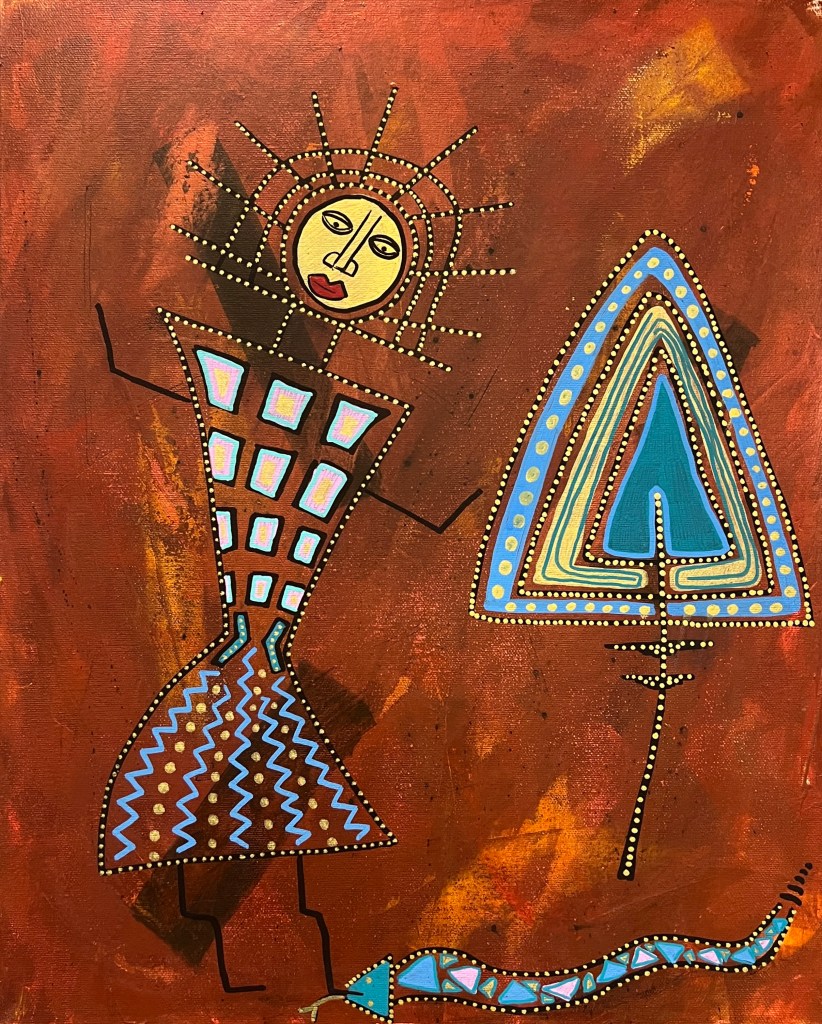
Drawing on echoes of Eve and the serpent, Crushing the Empire reimagines resistance as sacred and feminine. A solitary figure stands in quiet power, confronting forces of harm and domination. The work imagines women not as passive witnesses to injustice, but as those who dismantle it.
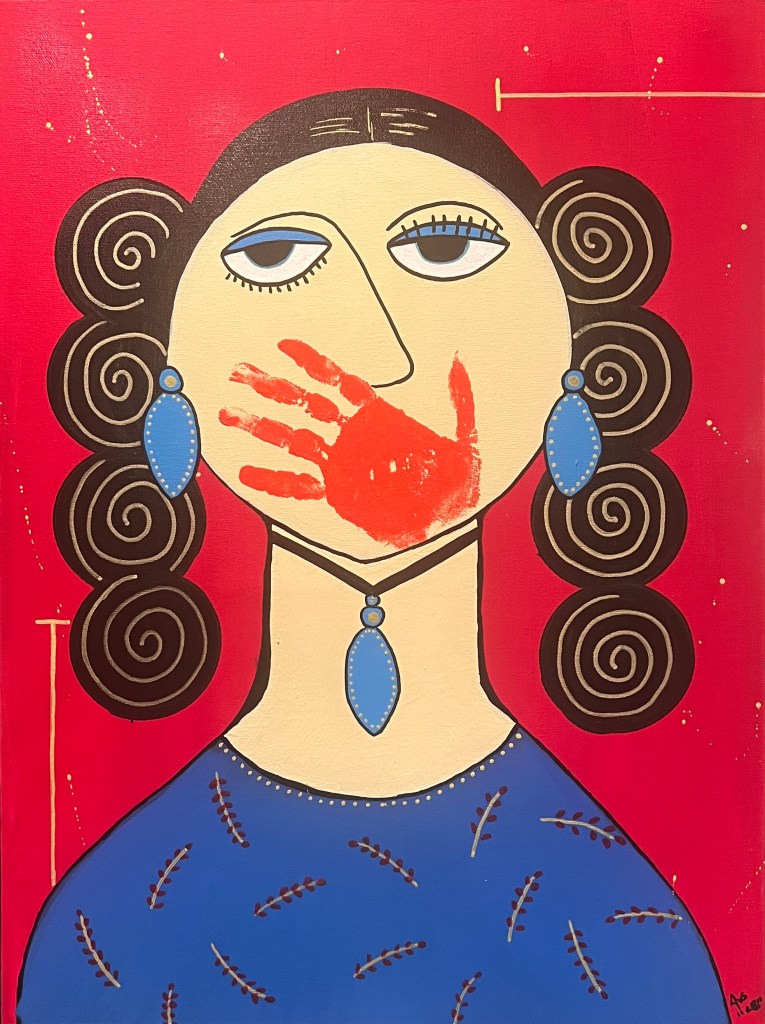
A woman meets the viewer’s gaze while a red handprint covers her mouth, evoking the ongoing crisis of Missing and Murdered Indigenous Women. The work calls for accountability, reminding us that we cannot be in right relationship with Creator, creation, or one another while Indigenous lives continue to be stolen and ignored.
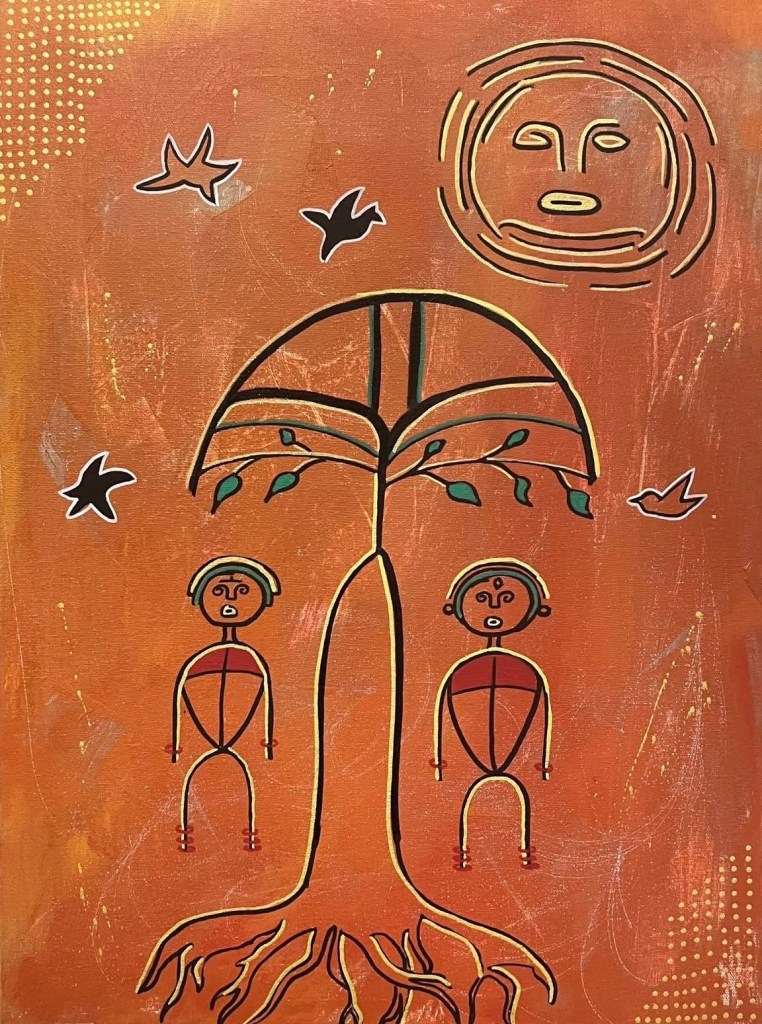
A tree stands as a living symbol of culture: rooted in memory, sustained through language, food, ritual, and story. Flanked by two guardians, Keepers of the Culture honors the responsibility of protecting what is sacred in the face of erasure, appropriation, and displacement.
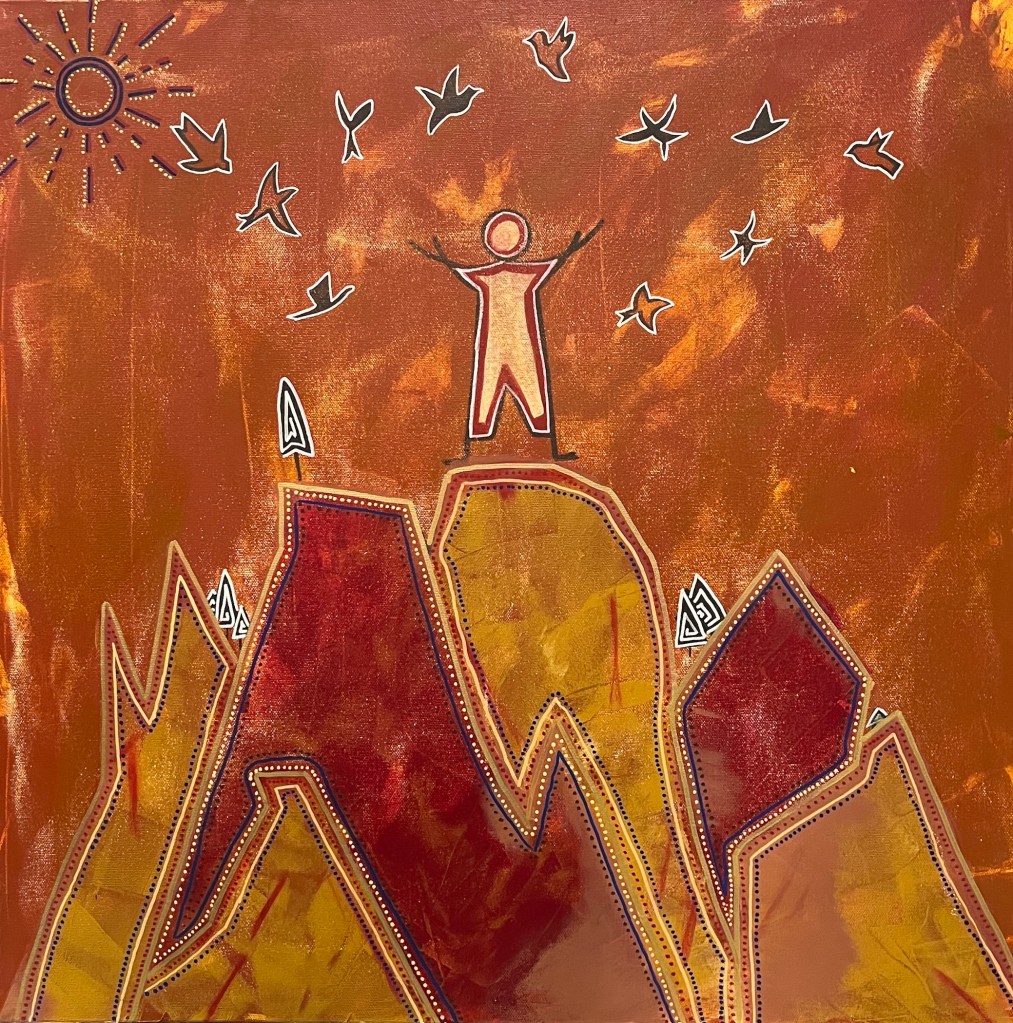
A human figure stands on a mountaintop with arms raised toward the sky as birds fly overhead. The work reflects the interconnected relationship between Creator, humanity, and the earth, calling attention to our responsibility as stewards of the natural world. It emphasizes care for ecosystems—animals, plants, and land—as a shared moral commitment rooted in relationship and accountability to creation and Creator.
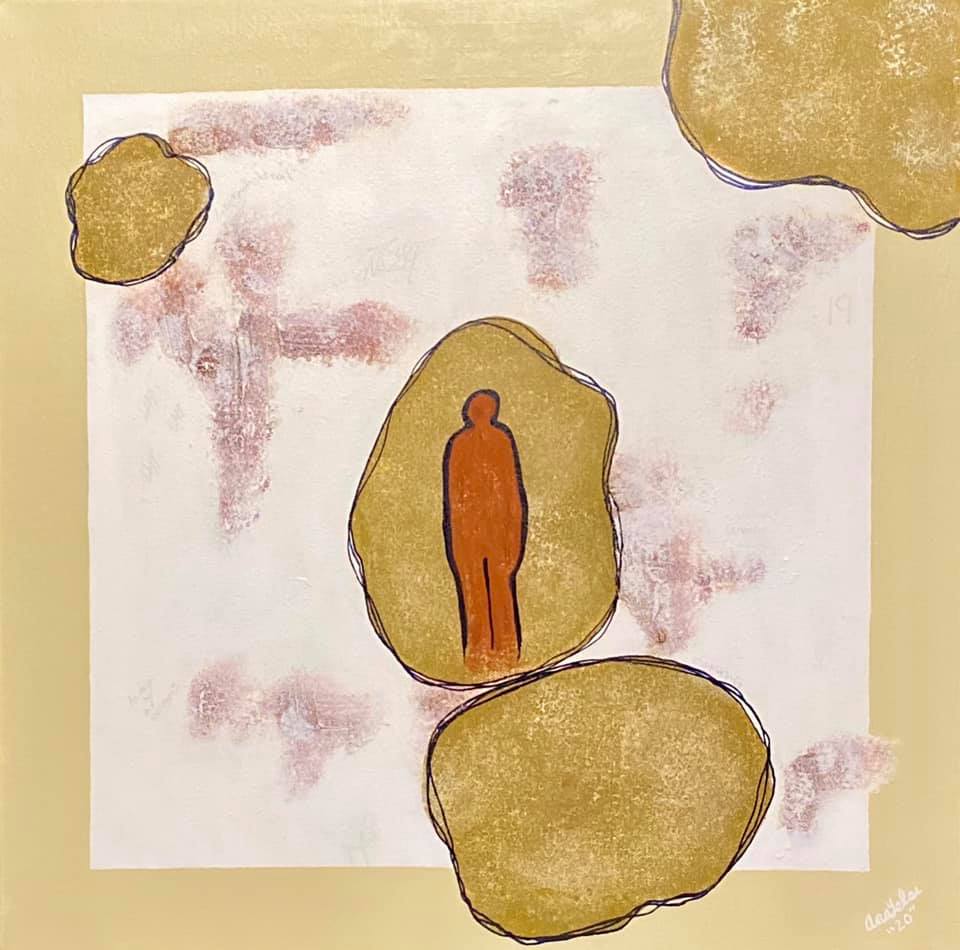
Created during the height of the COVID-19 pandemic, this painting reflects the profound disruption of human connection and the ways separation reshaped our understanding of one another. Empty space presses inward, revealing how deeply people are formed through relationships and shared presence. The work serves as a reminder that care, belonging, and collective well-being are not optional, but essential to what makes us human.
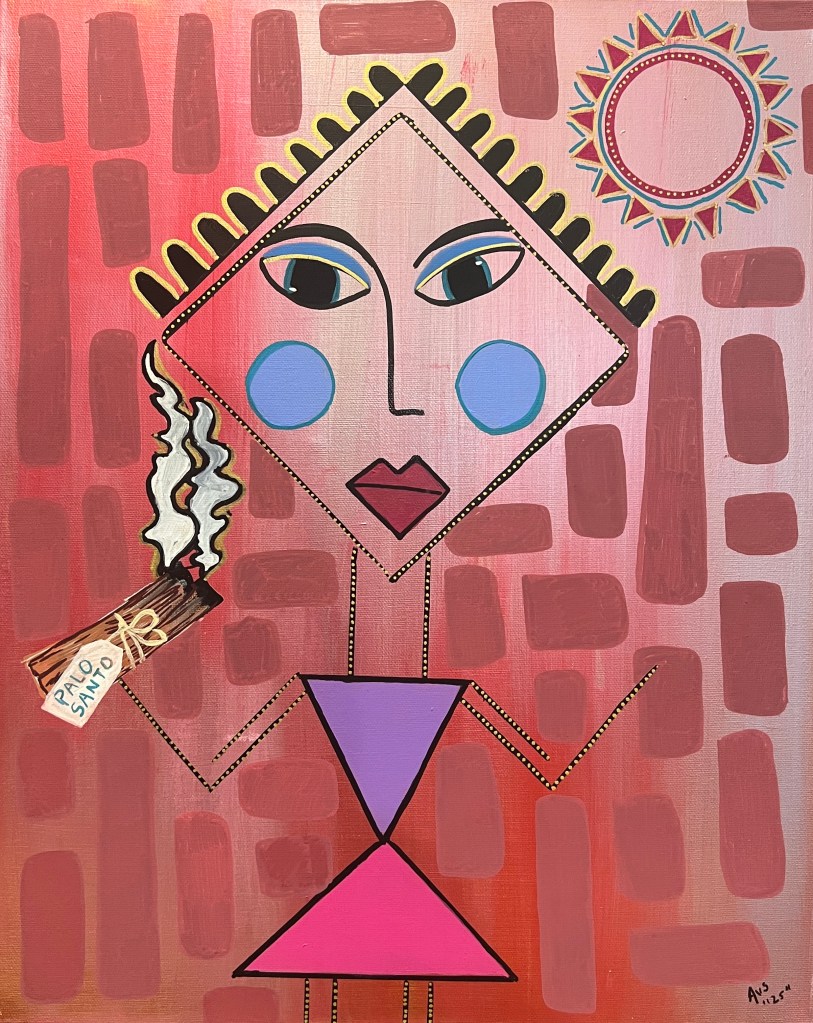
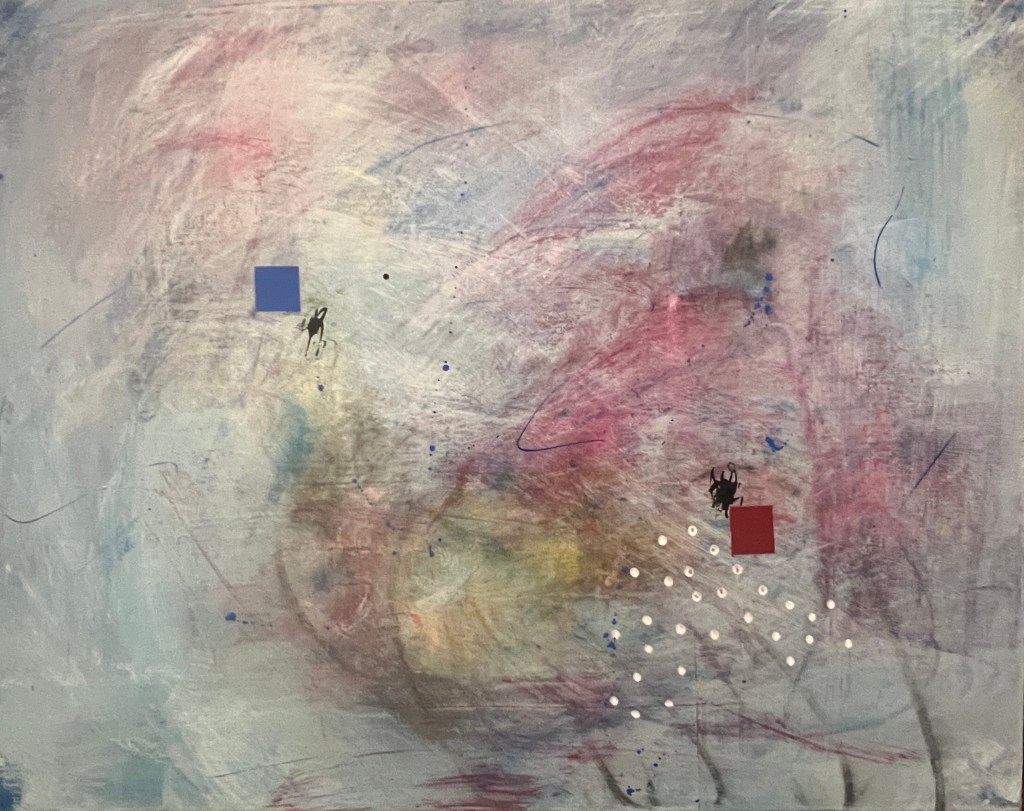
This piece reflects the quiet ways we seek spiritual renewal, reaching for practices that help clear what weighs on the spirit and reconnect us to what is sacred. It invites reflection on how healing begins in moments of intention and how our ability to care for one another, the earth, and ourselves is rooted in tending to our spirits.
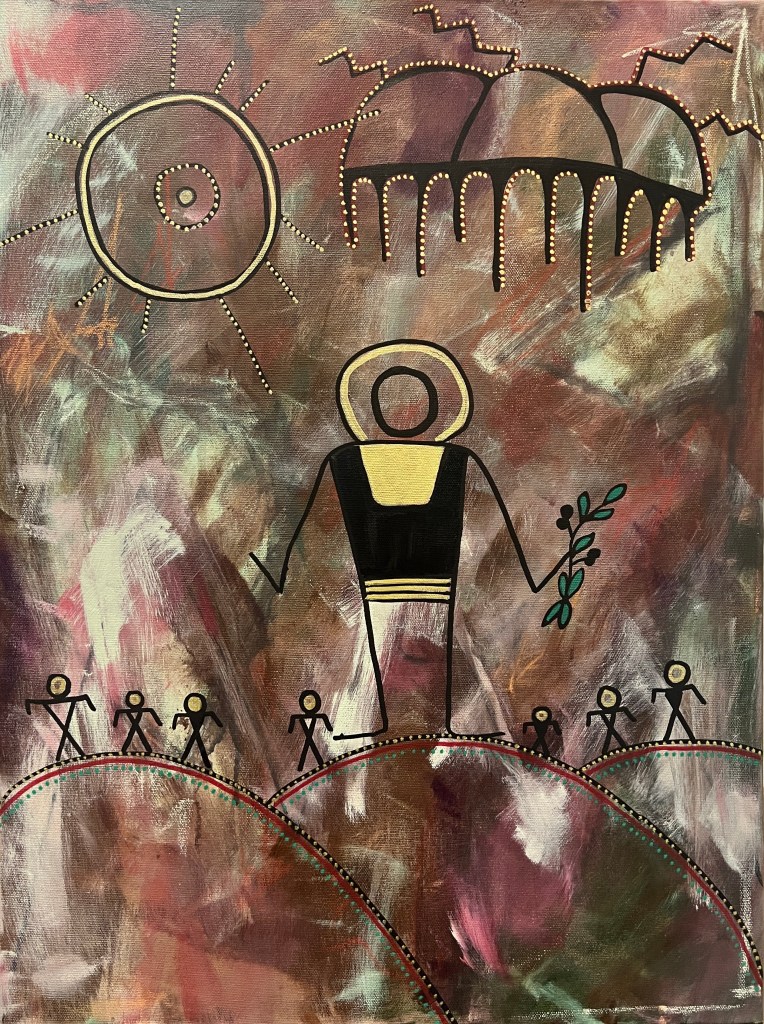
“Creator” presents a large figure standing on a hill, holding an olive branch as a sign of sustaining presence and peace. Surrounded by smaller human figures, the work reflects a deep spiritual connection between Creator and creation, where care is constant and relational. Sun, rain, and lightning fill the sky, holding both abundance and uncertainty, and reminding us that life is shaped and carried through forces larger than ourselves.
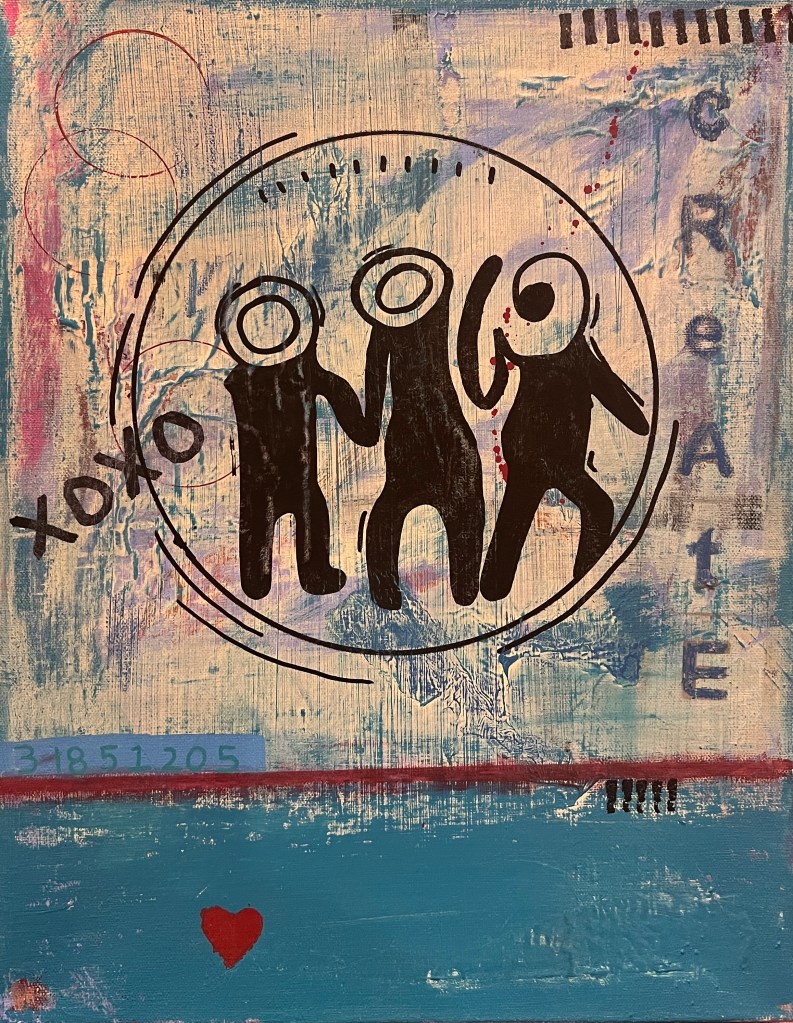
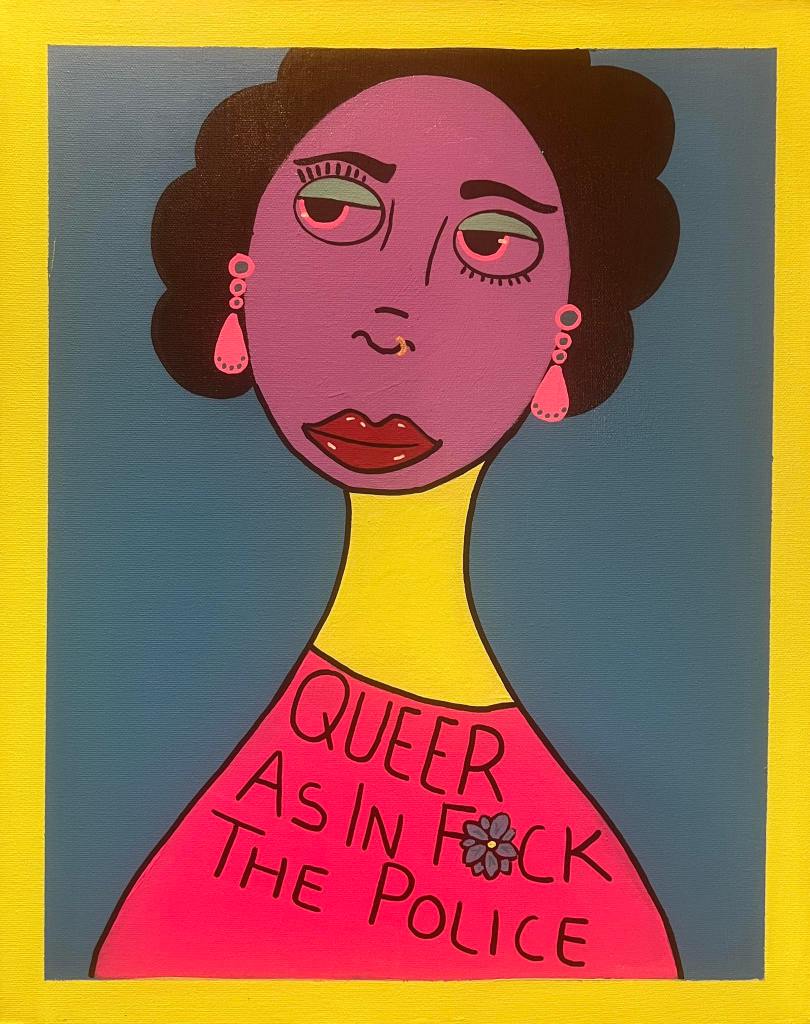
Three figures are shown reaching toward one another, bodies oriented toward connection. The work reflects LGBTQ+ struggles for dignity and belonging in the face of exclusion and erasure. It also makes clear that social justice movements have much to learn from queer communities, whose practices of expansive love, care, and inclusion strengthen our collective capacity to pursue liberation through compassion.
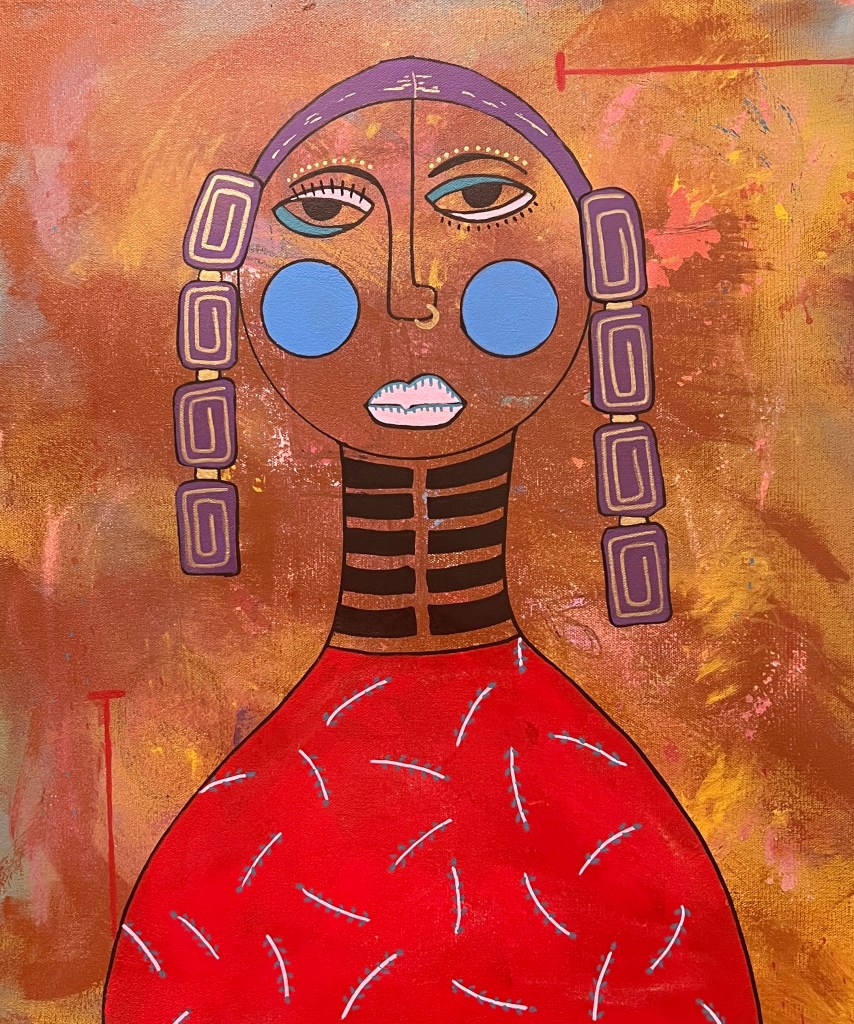
This piece honors the enduring power of women who carry healing traditions through generations. Curanderas, brujas, healers, and wisdom keepers have long tended wounds that injustice creates. Healing becomes an act of survival, wisdom, and cultural transformation, shaping more just possibilities for collective life.
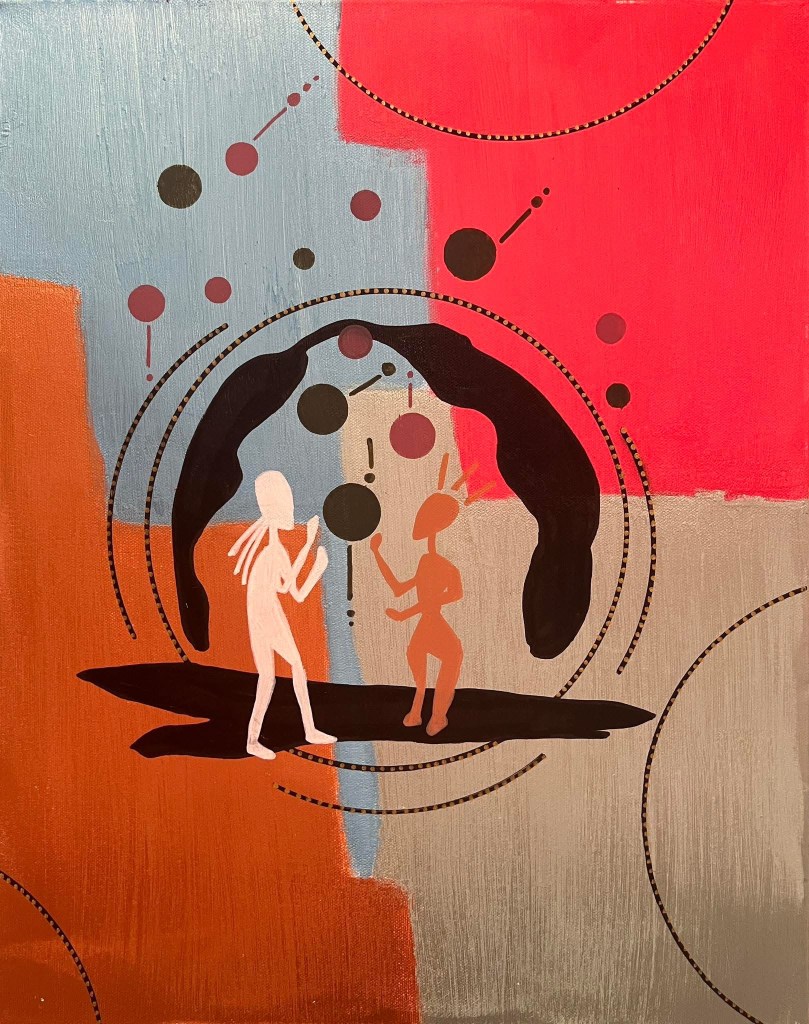
Inspired by conversations on anti-Blackness within Latine communities, this painting names the enduring impact of white supremacy and the work of unlearning it. The suspended orbs, released by the figures, symbolize the difficult but necessary act of letting go of anti-Blackness rooted through history, fear, and internalized oppression.
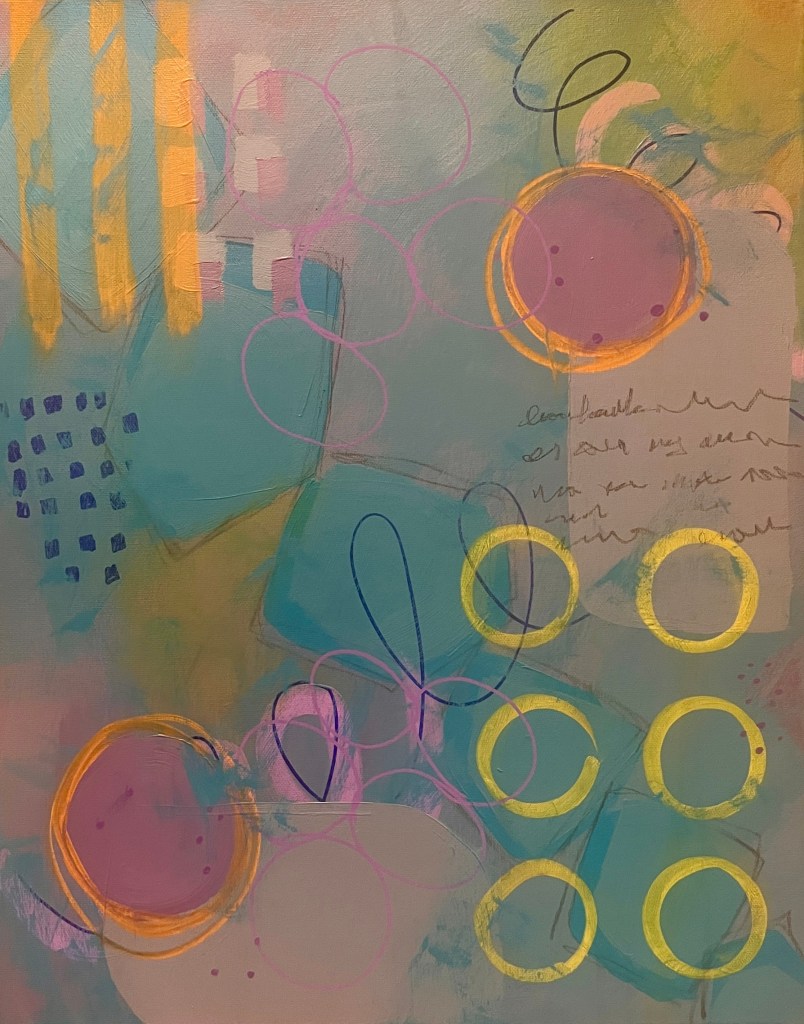
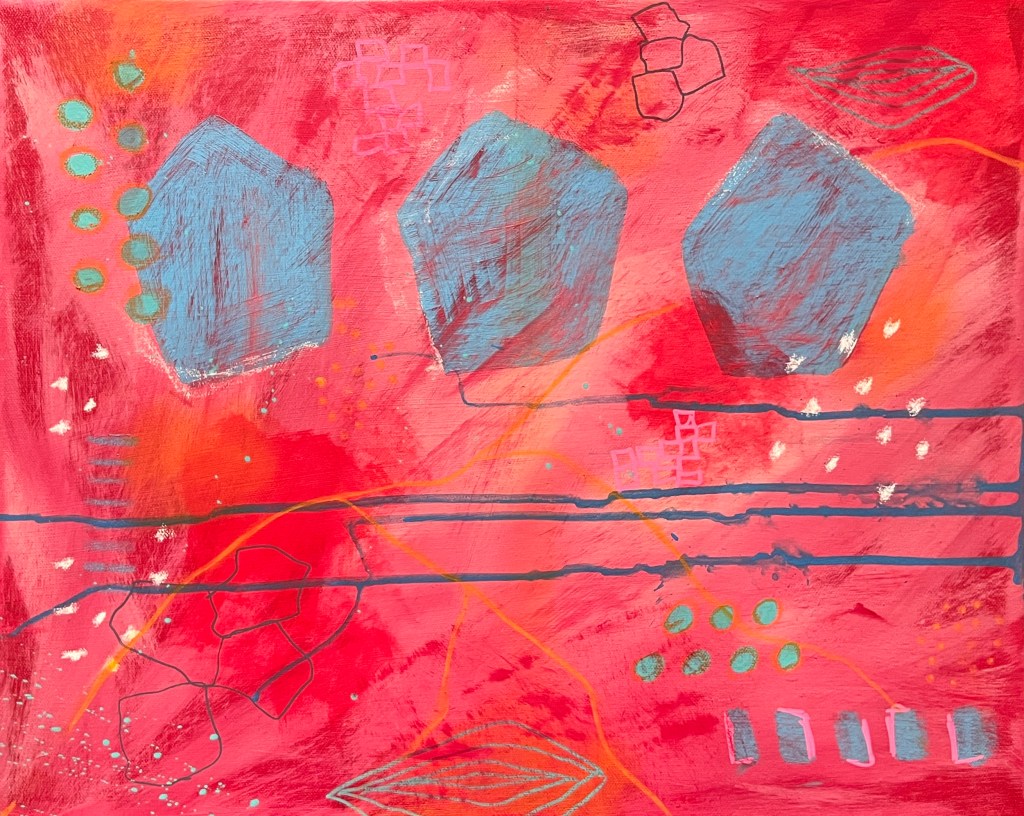
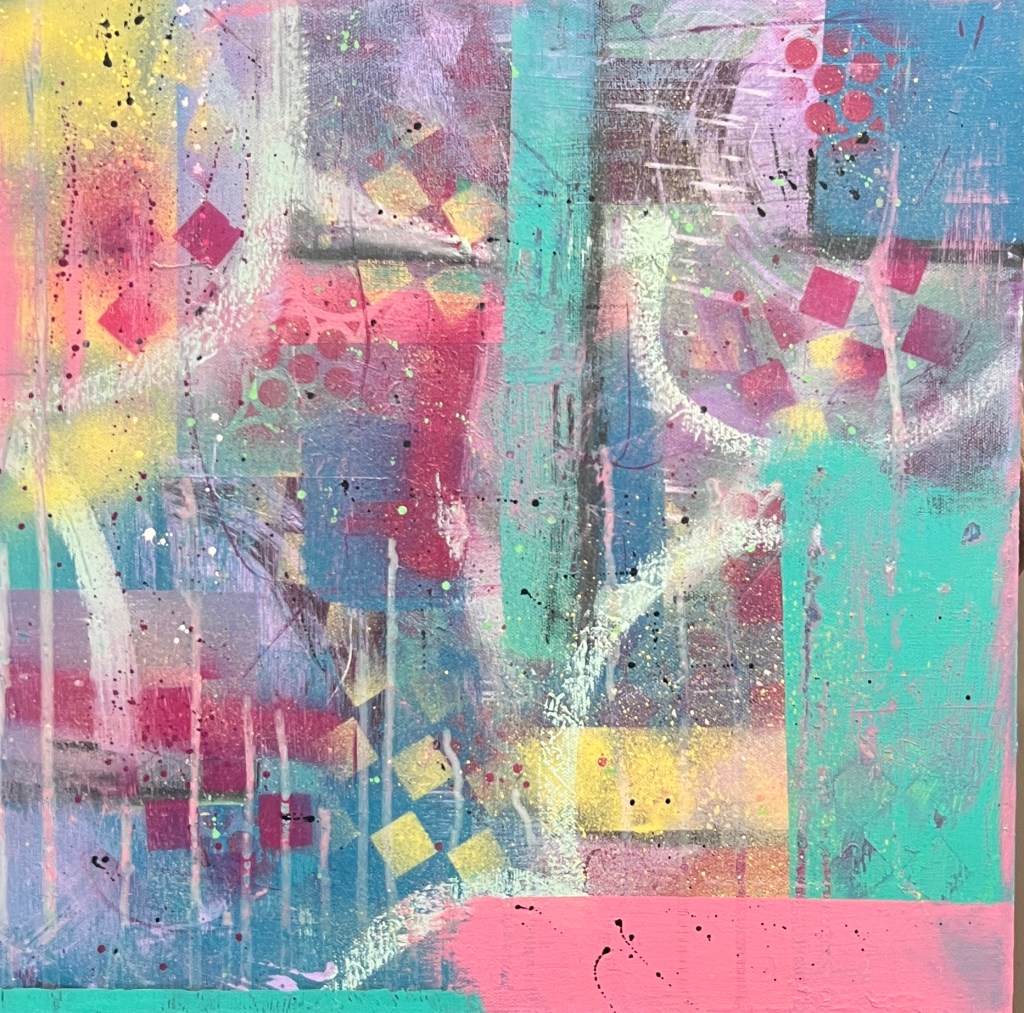
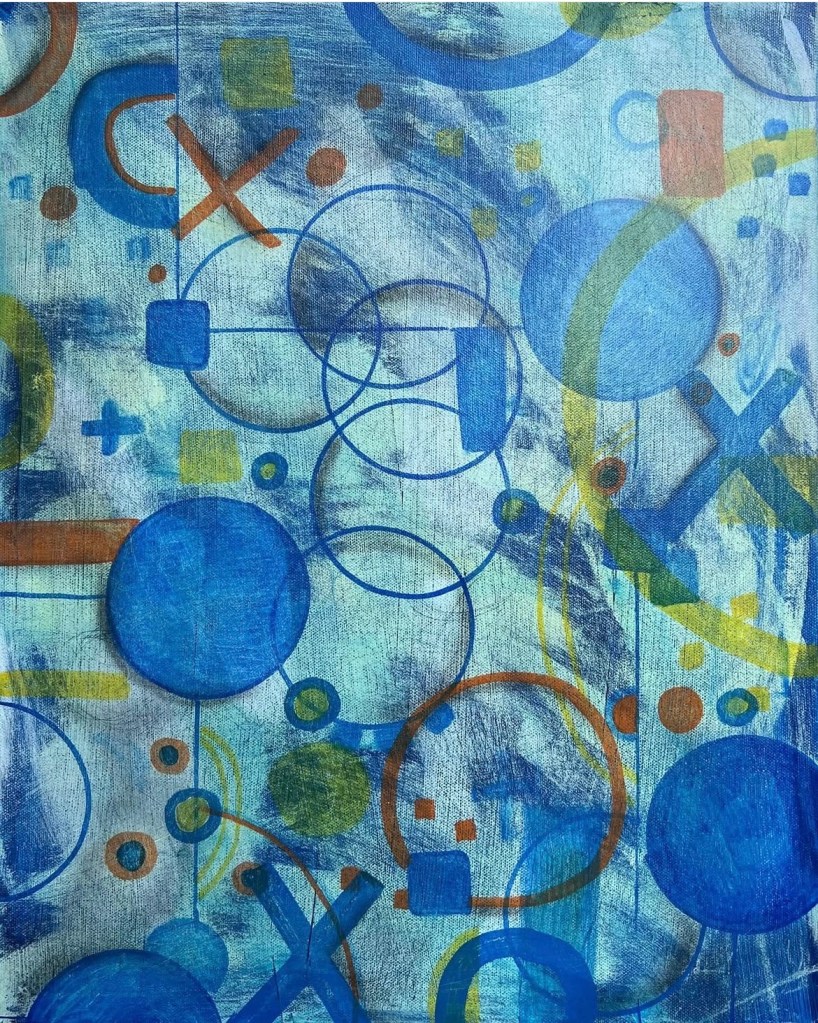
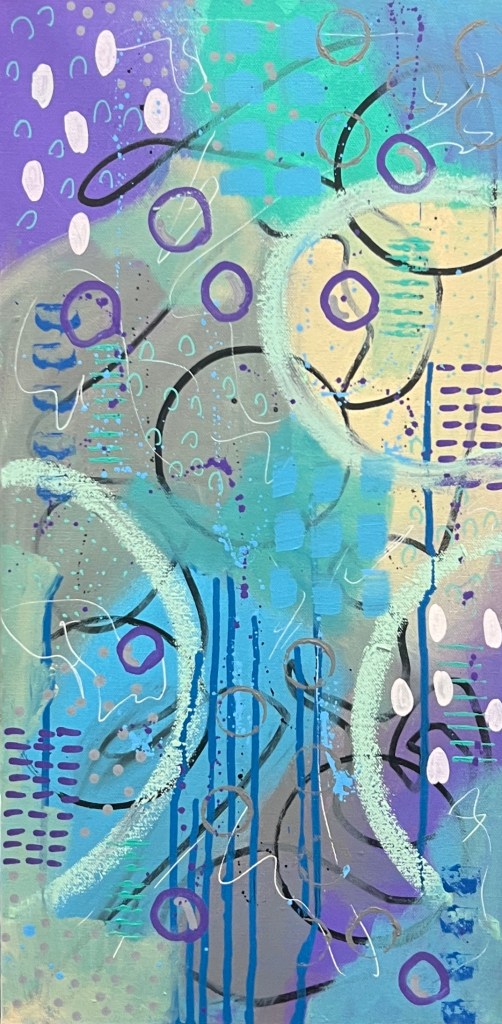
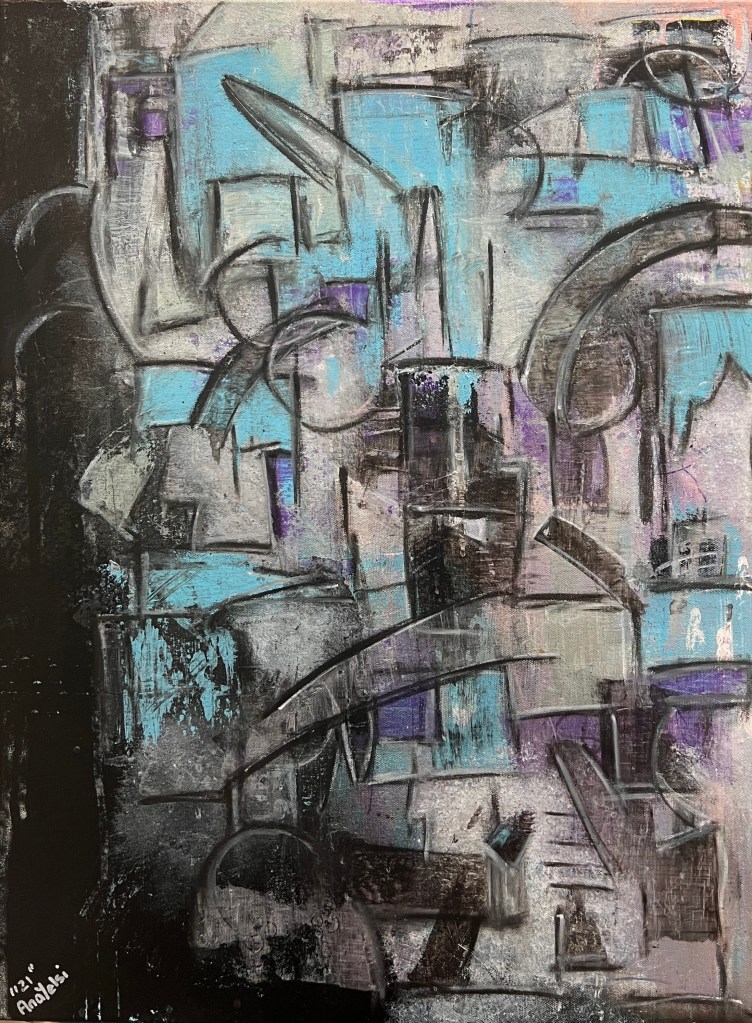
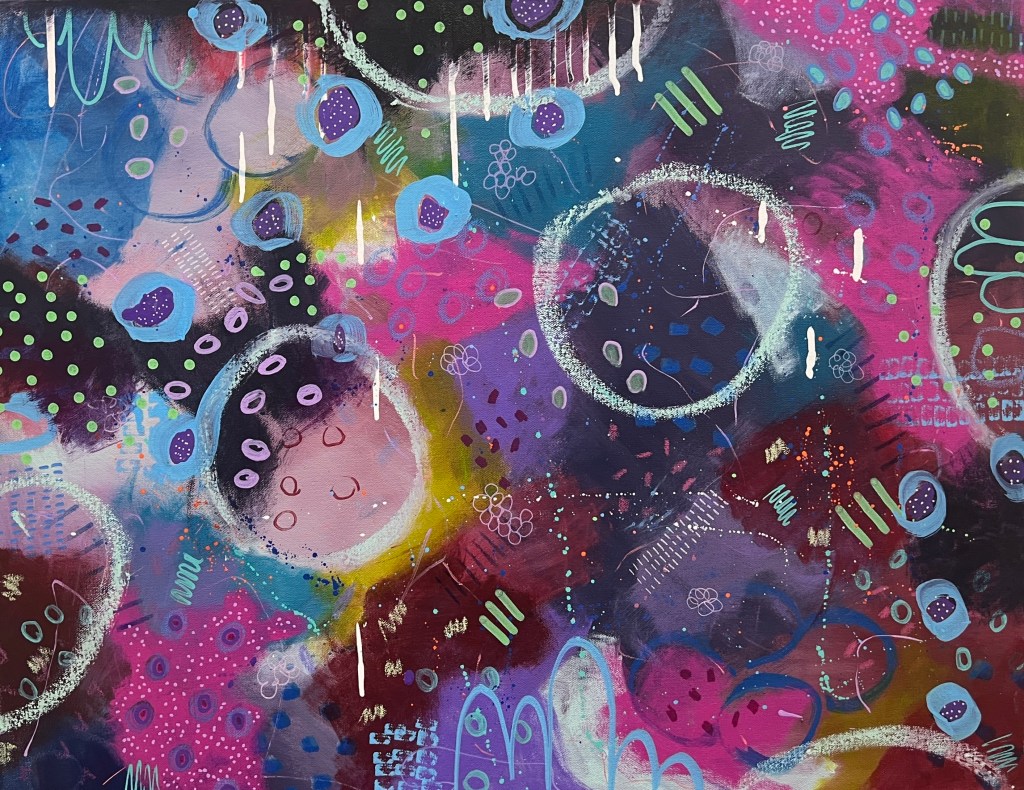
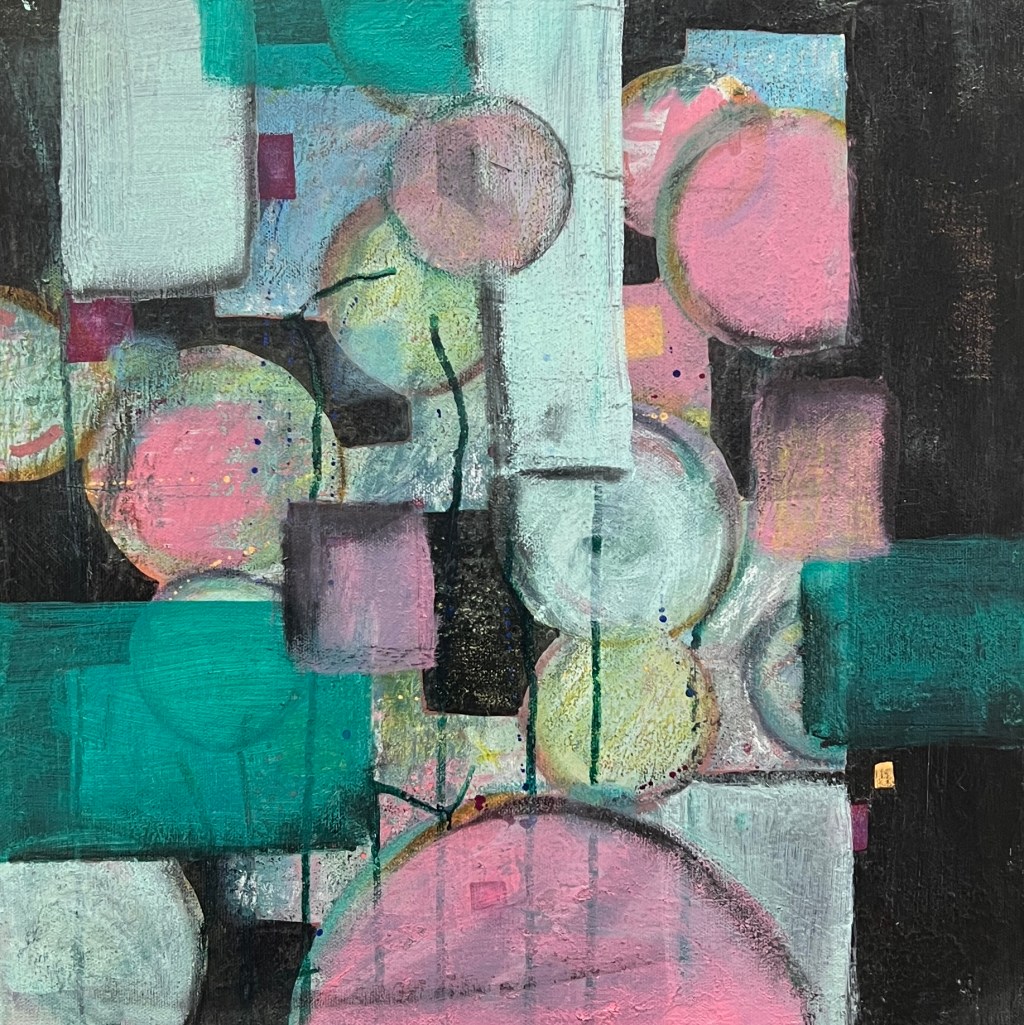
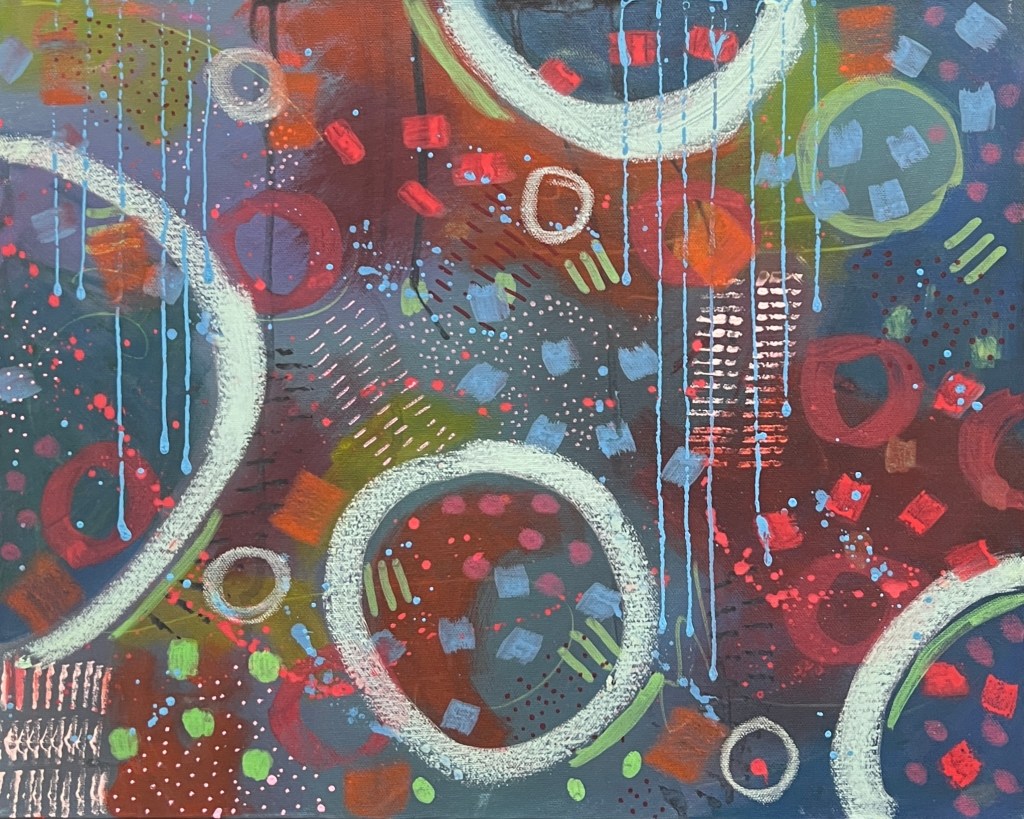
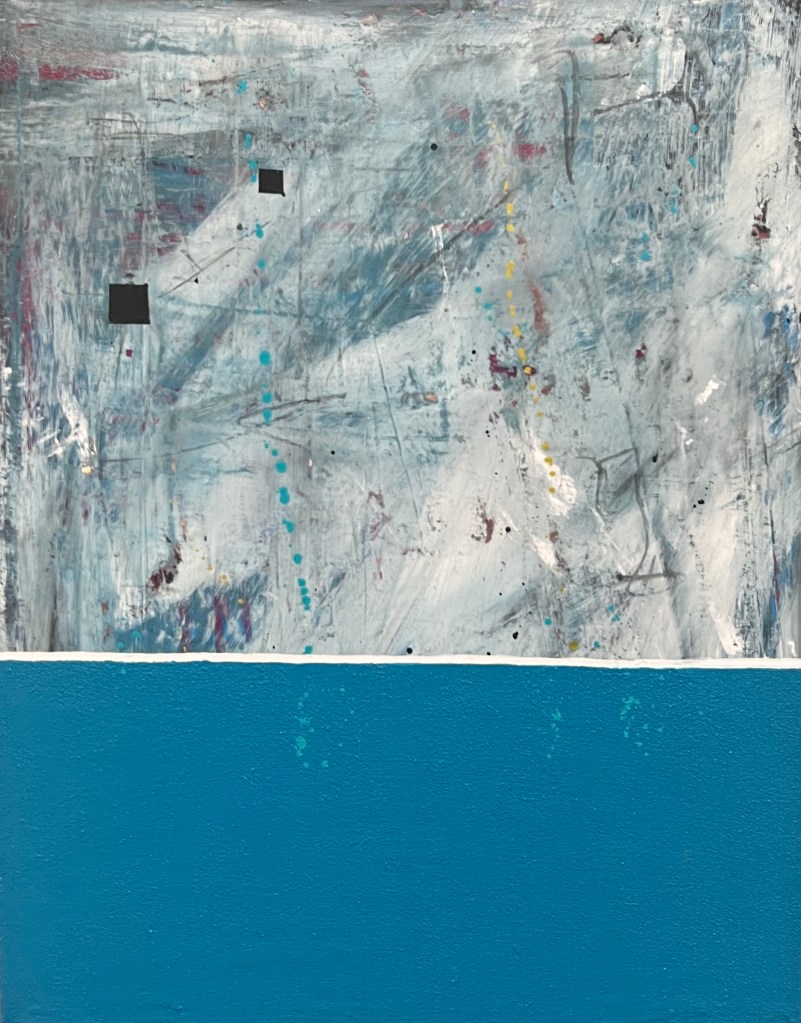
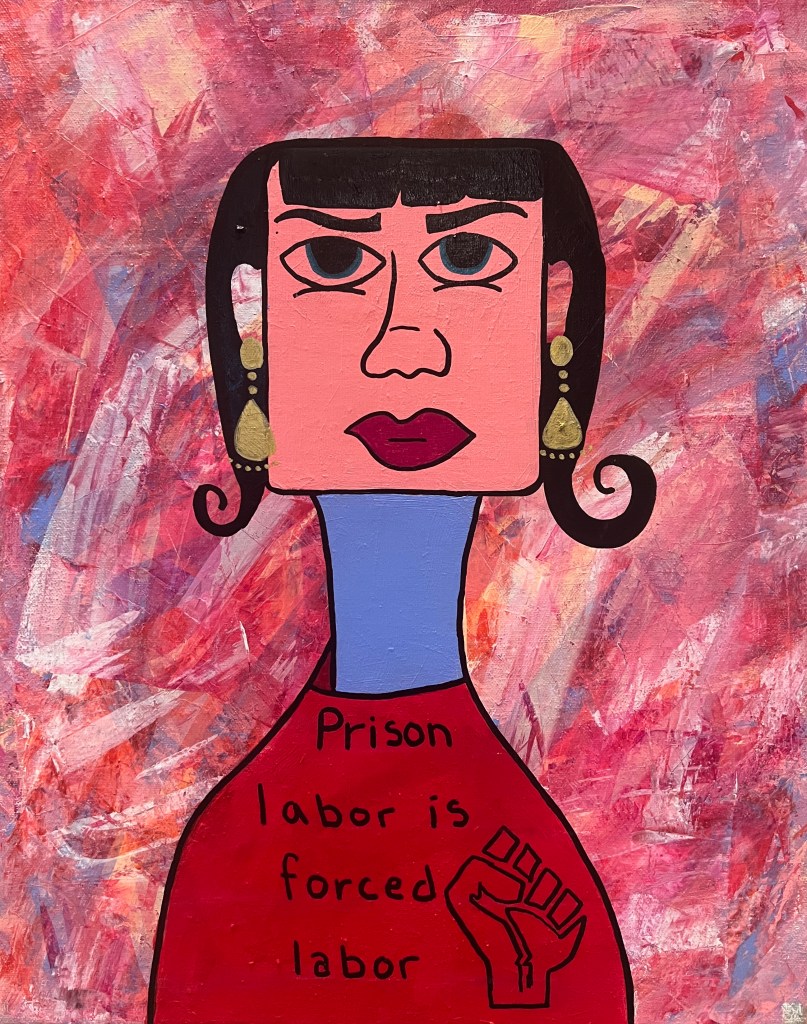

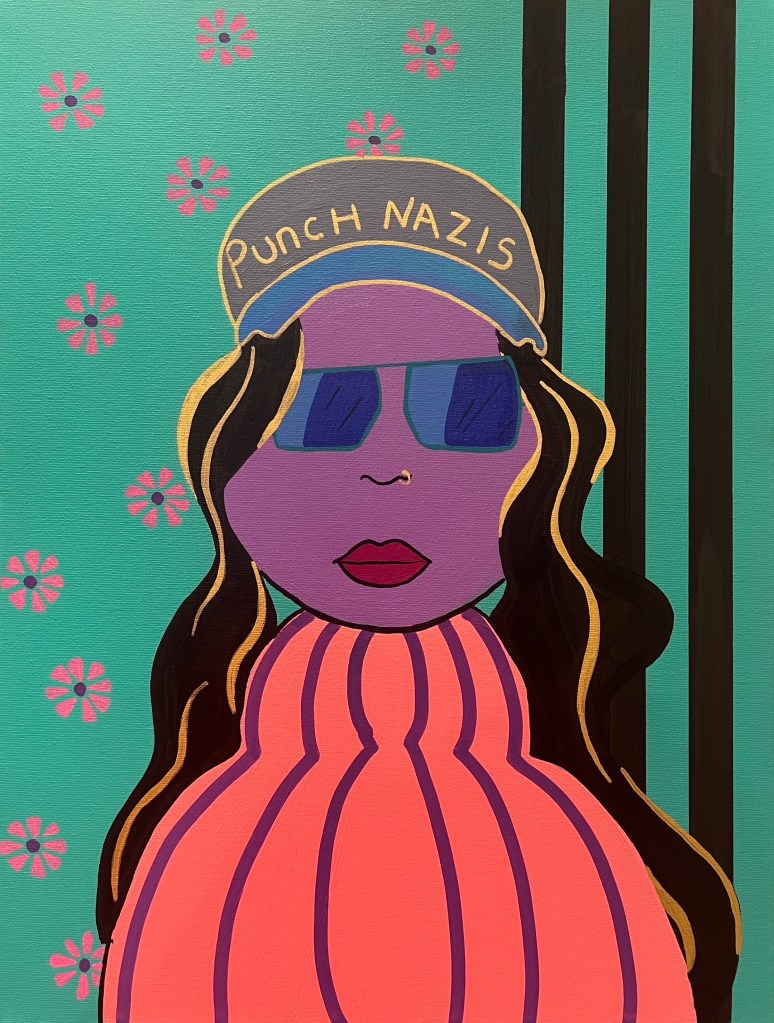
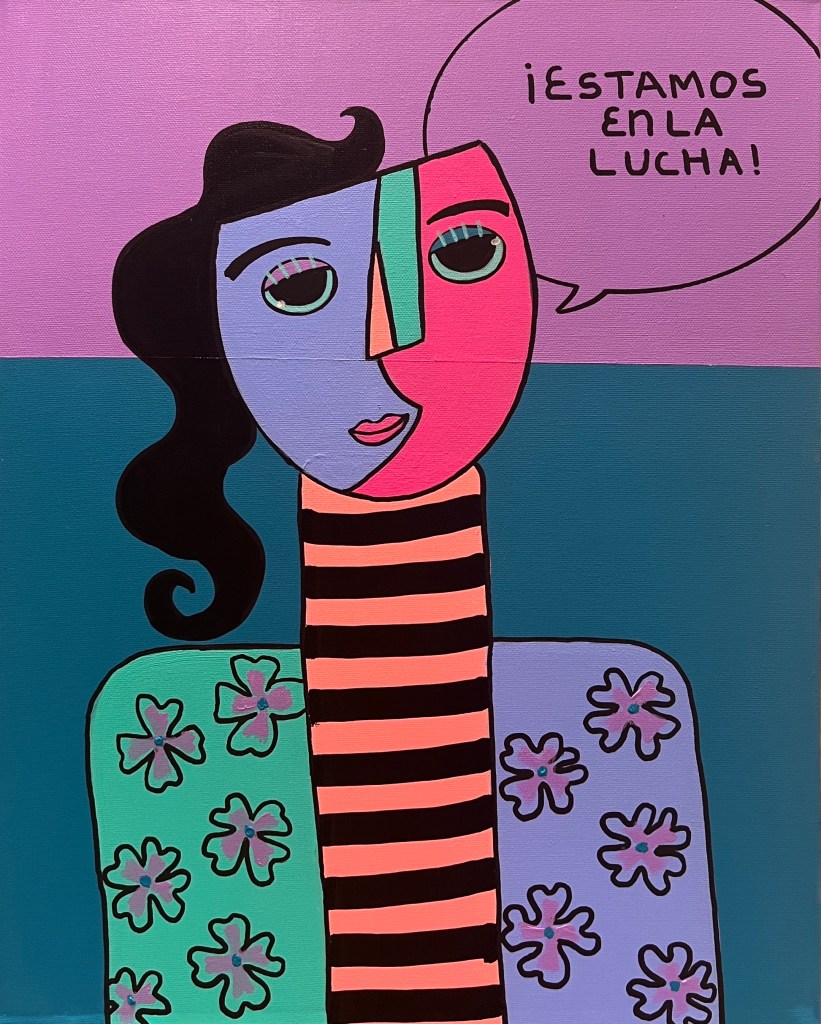

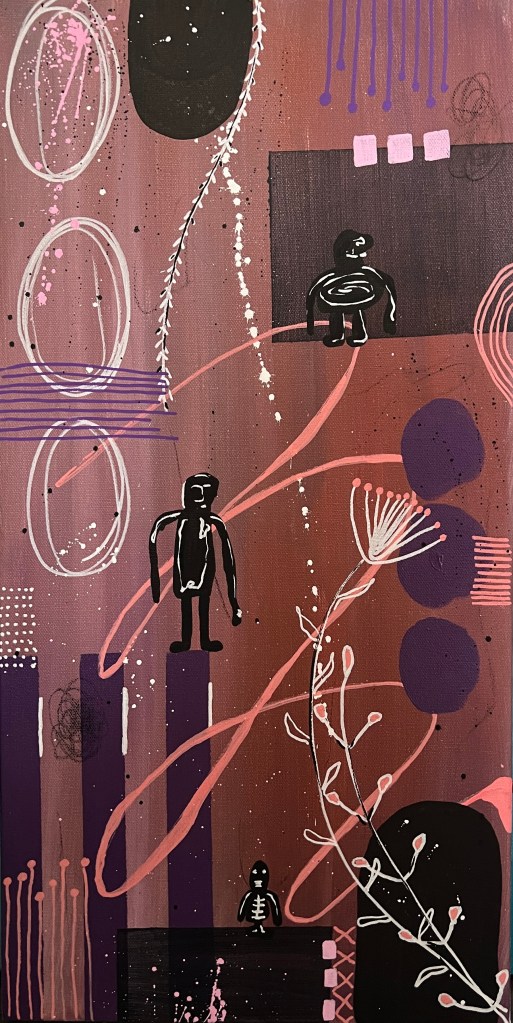

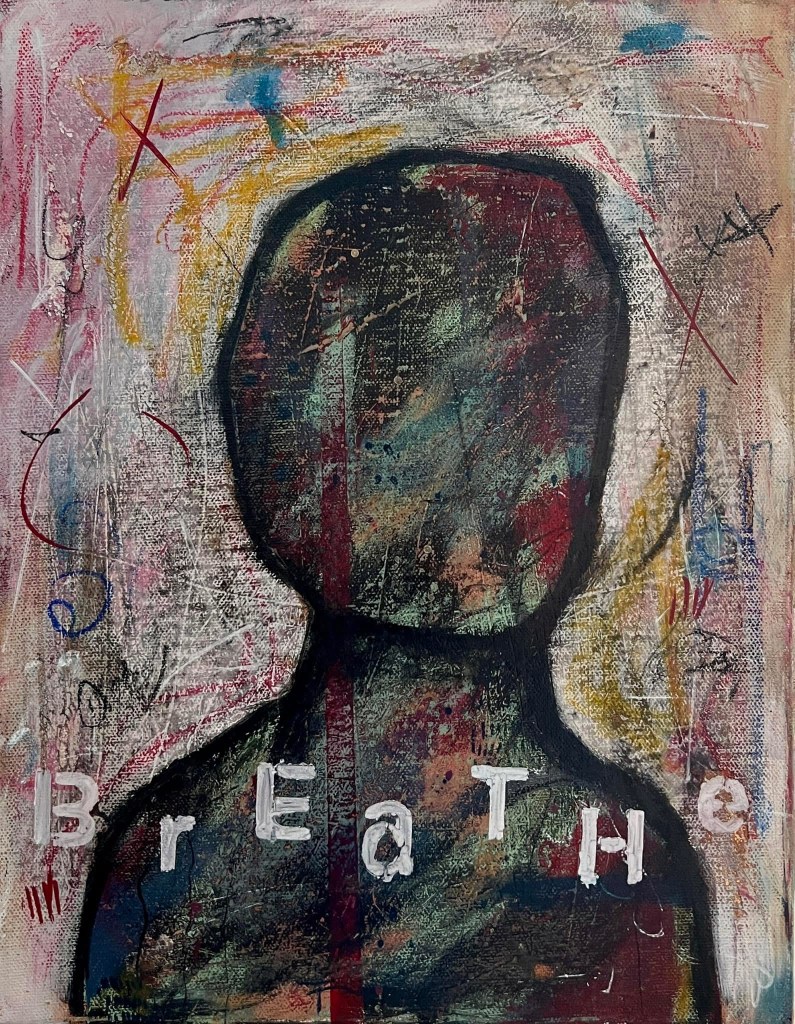


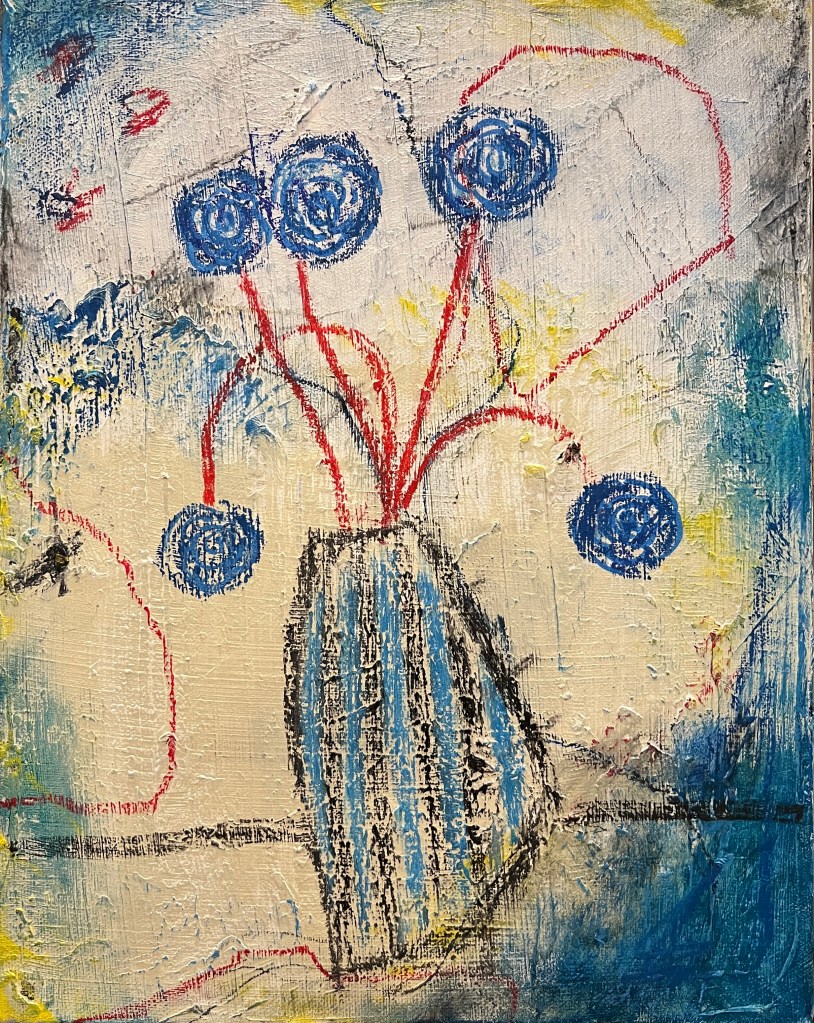
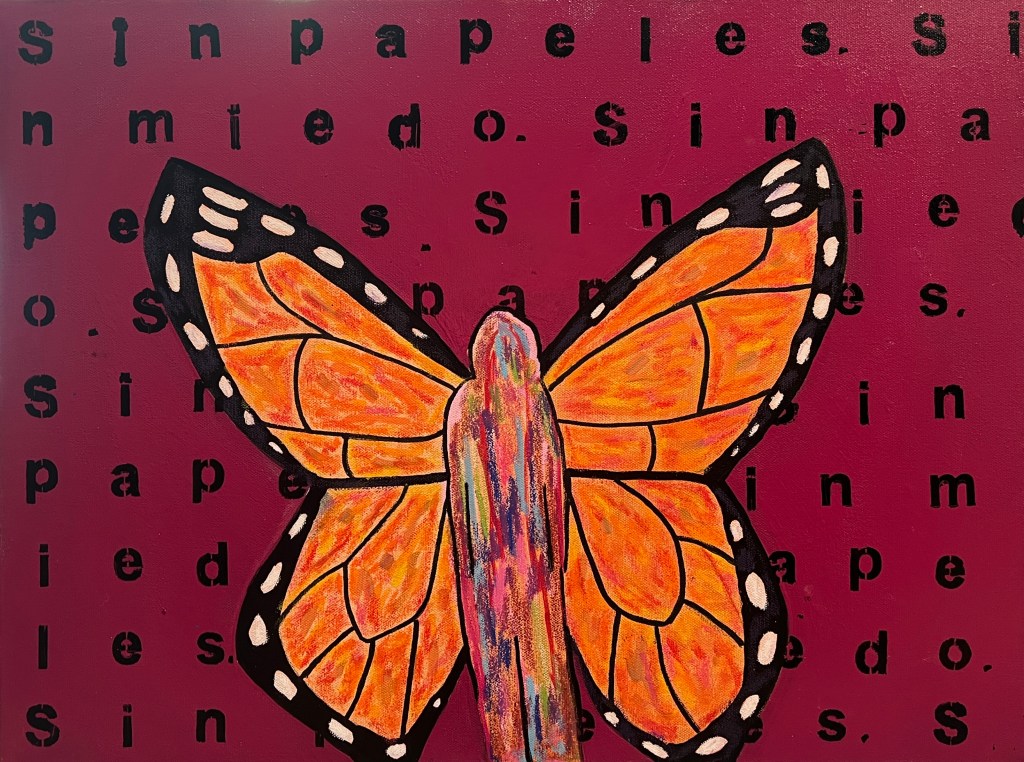
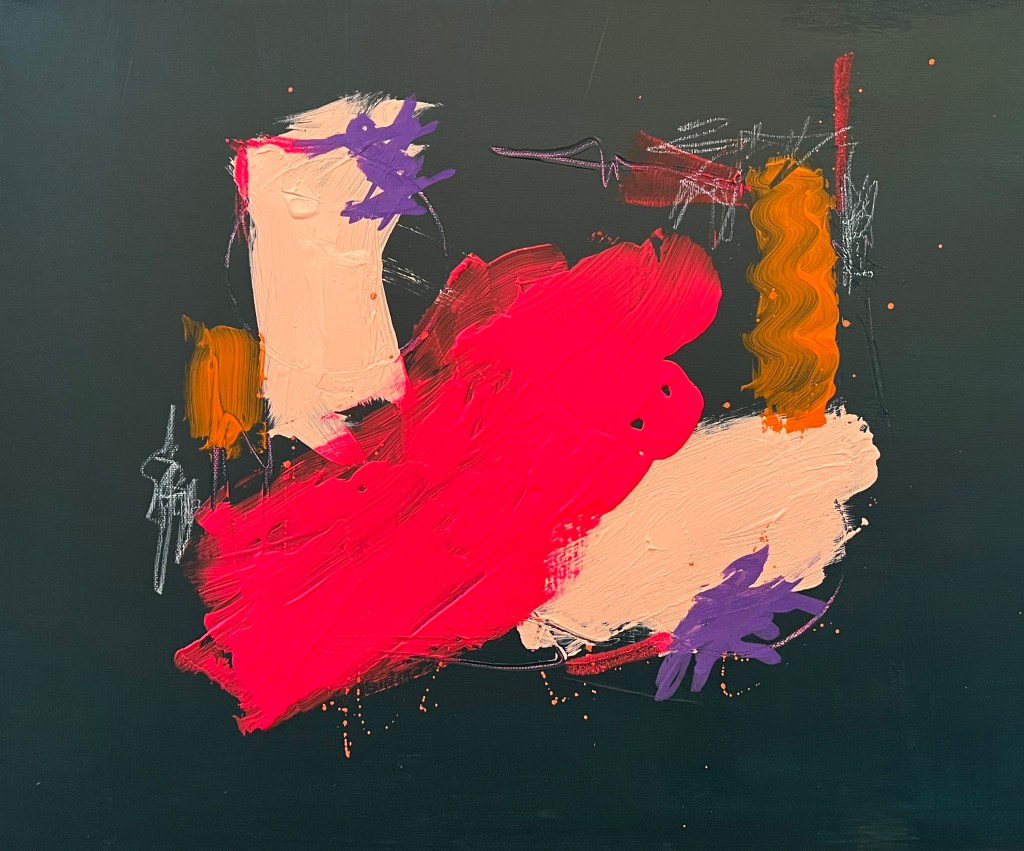
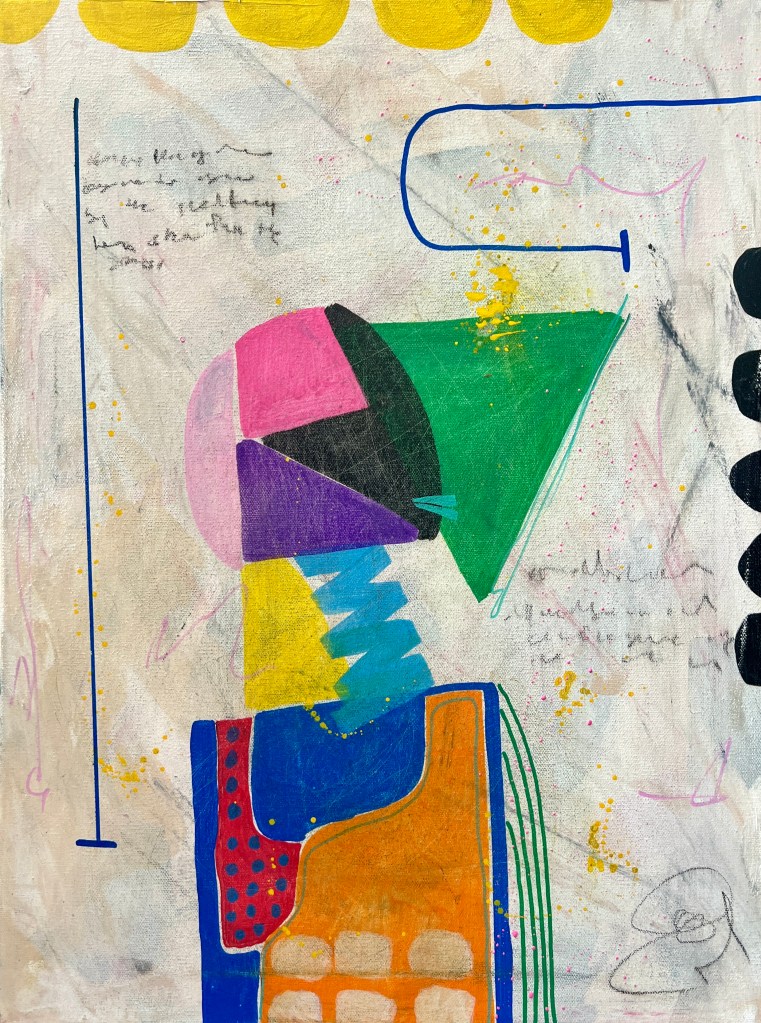
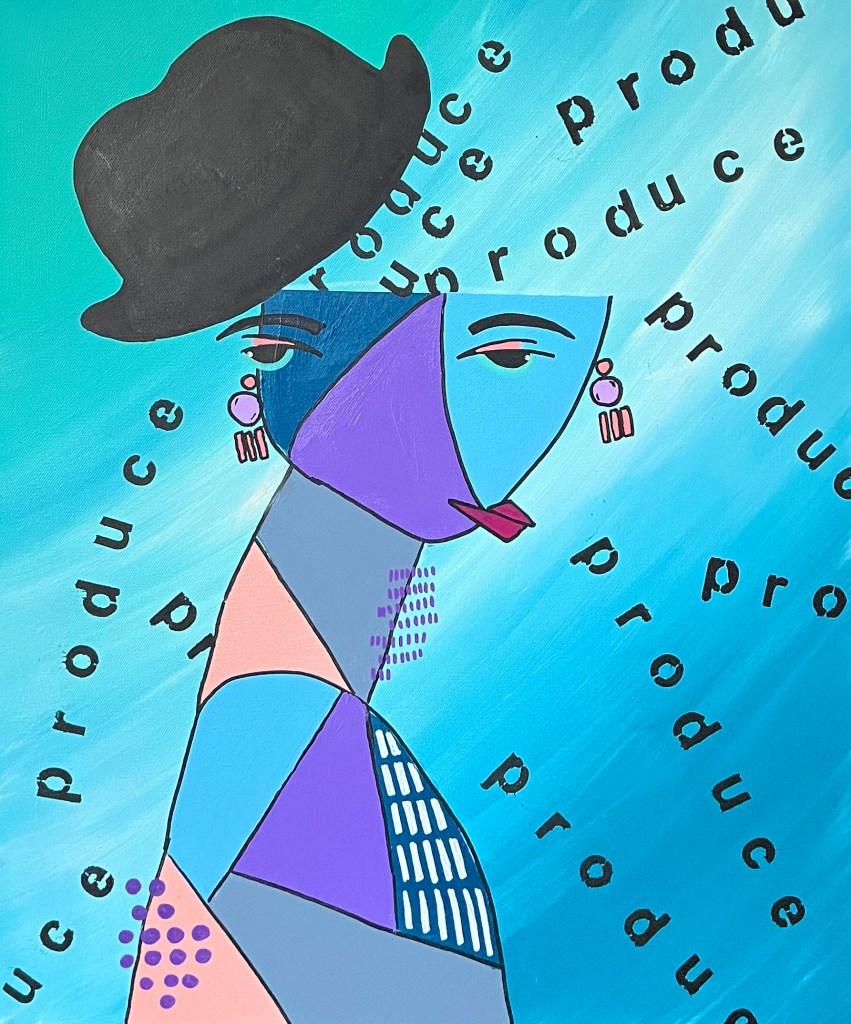

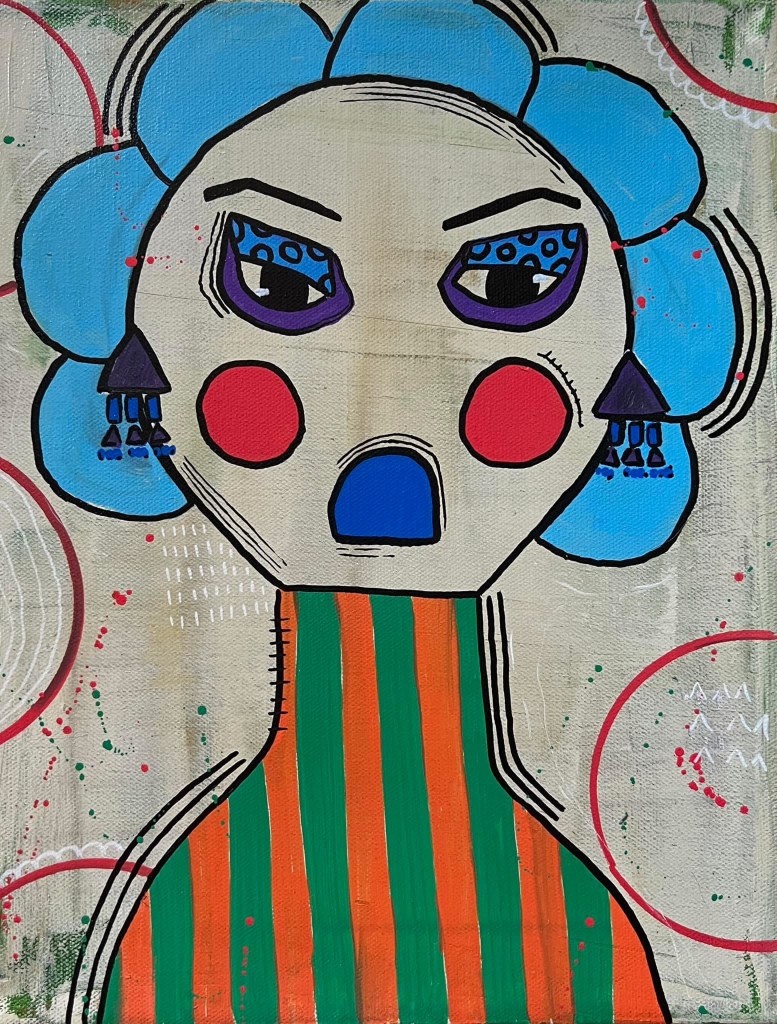
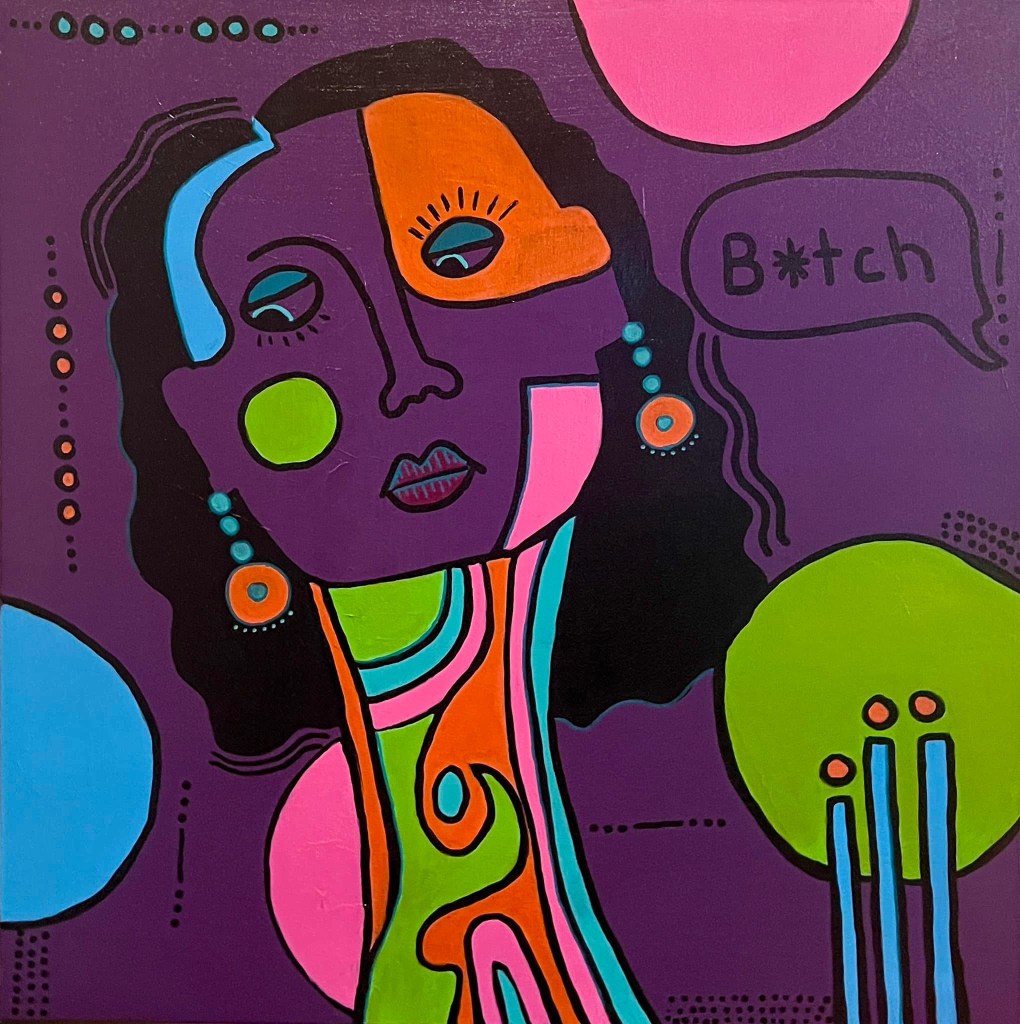
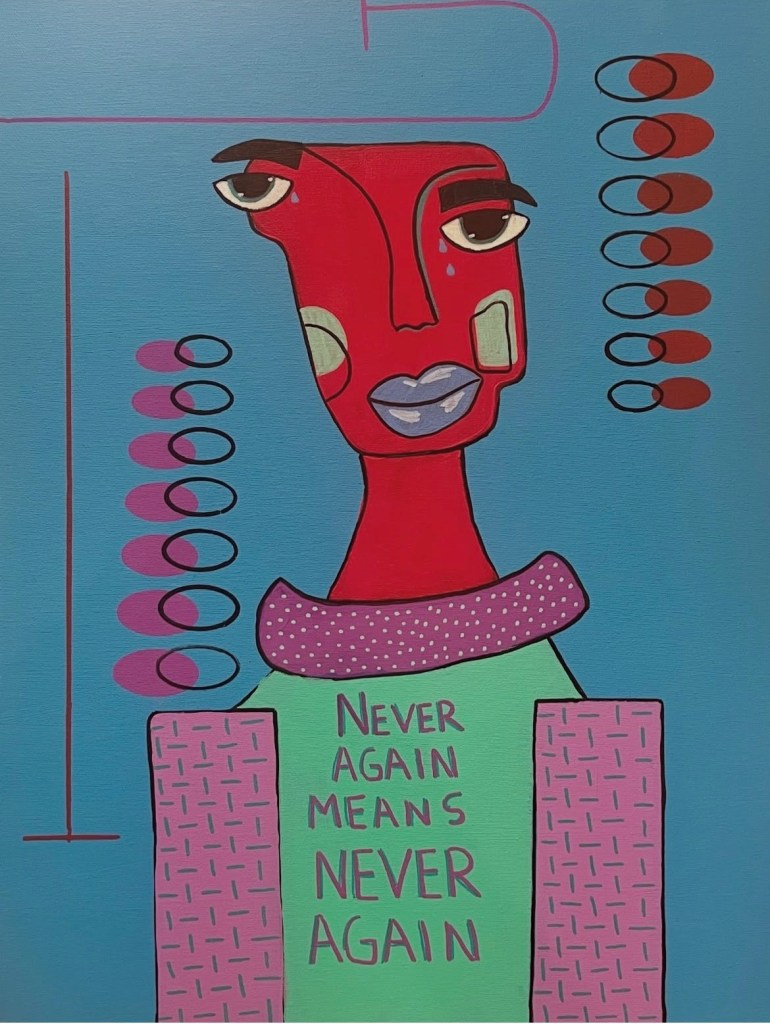
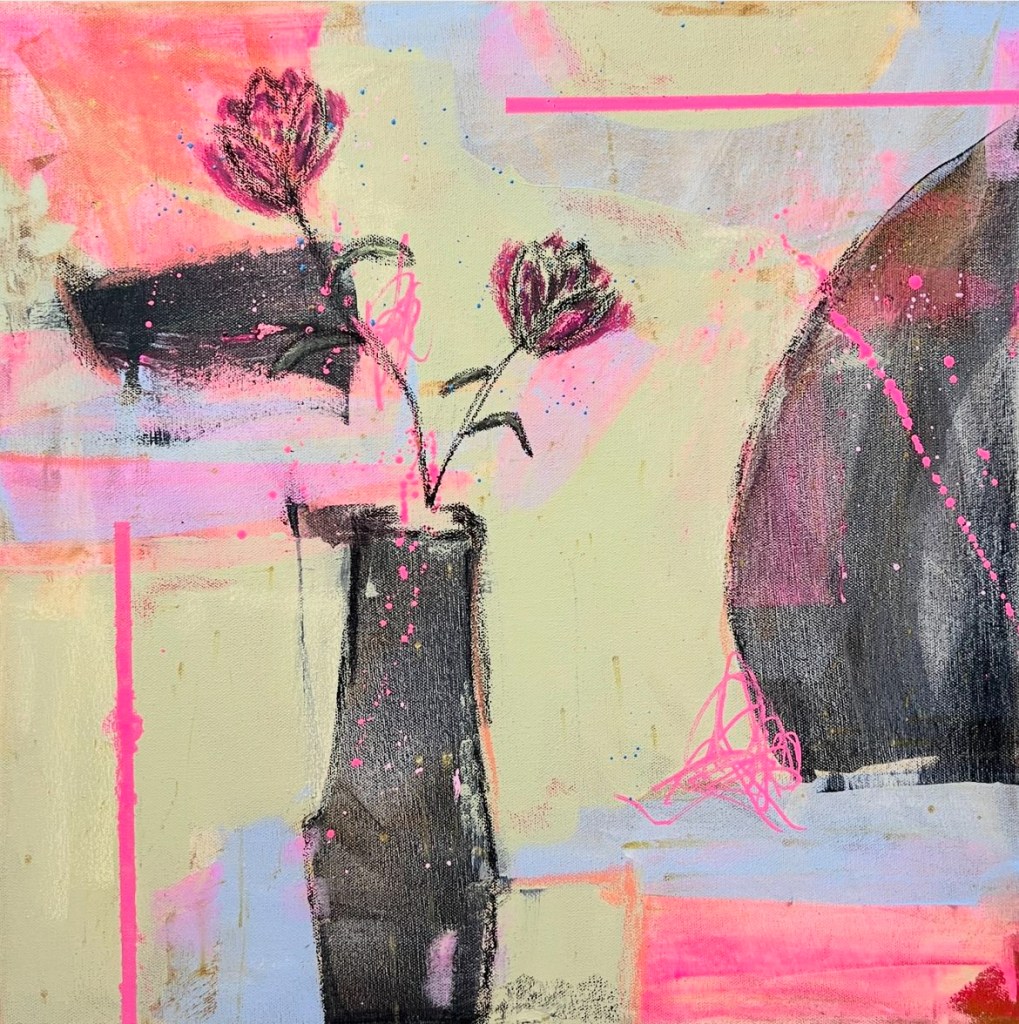
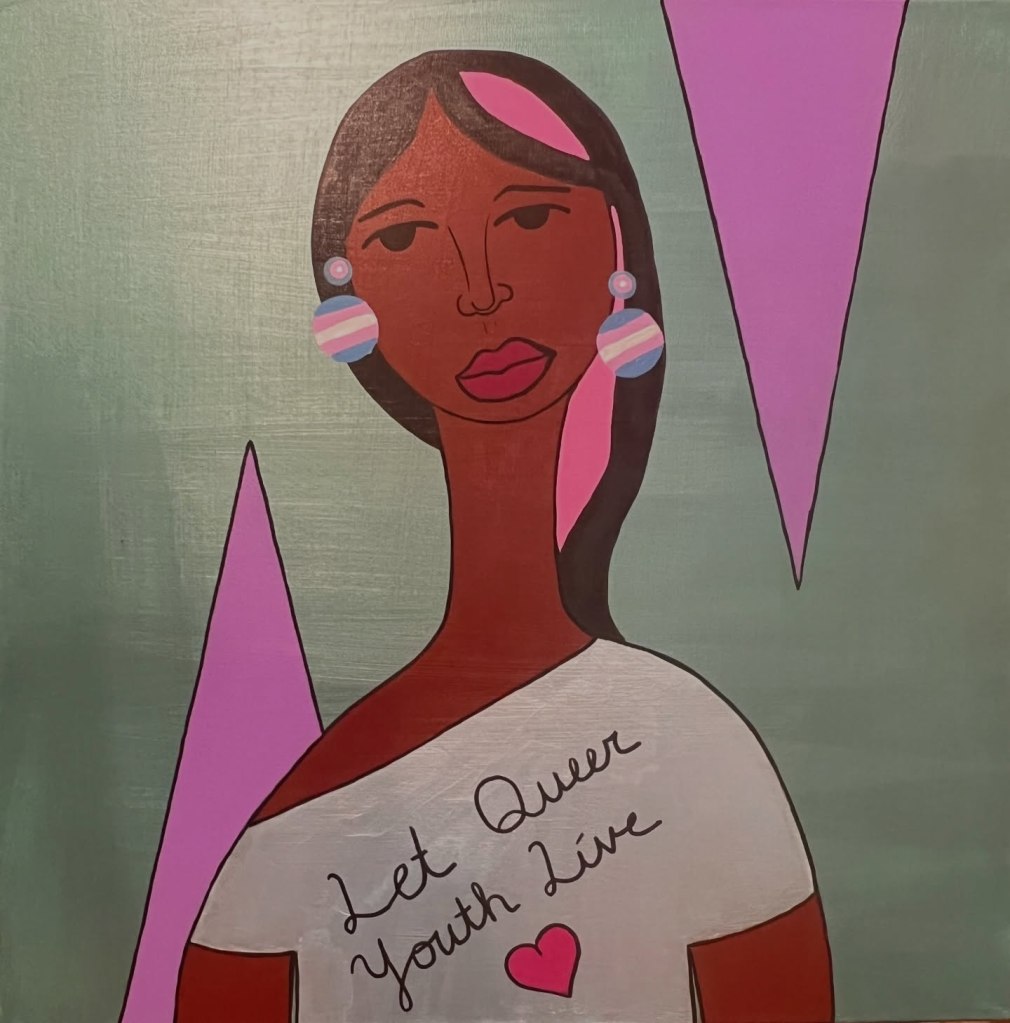
24”x24”
.
“People inspire me. I don’t think they realize how truly amazing they are and I love watching the way the people around me interact and express themselves. I love those special moments when I see “average” people be inspiring in their own unique way. It’s beautiful.” – AnaYelsi Velasco Sanchez
.
.
Sold Paintings
(the following pieces are sold. Please email contact@anayelsi.com purchase prints)
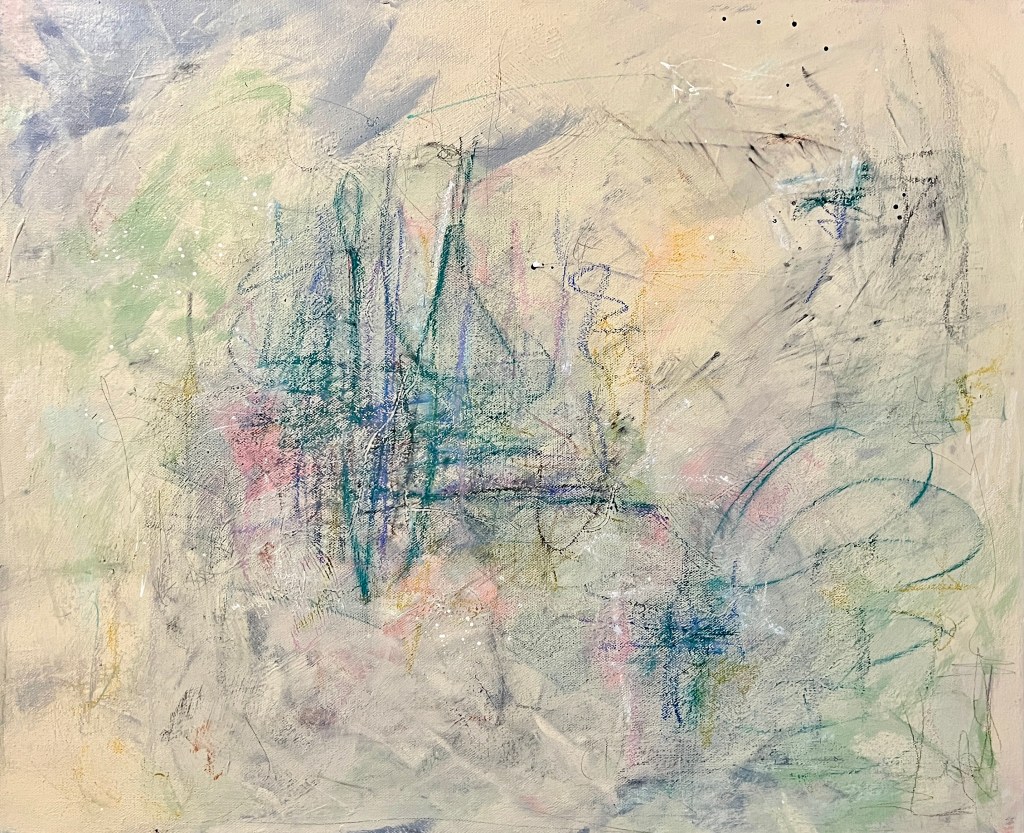
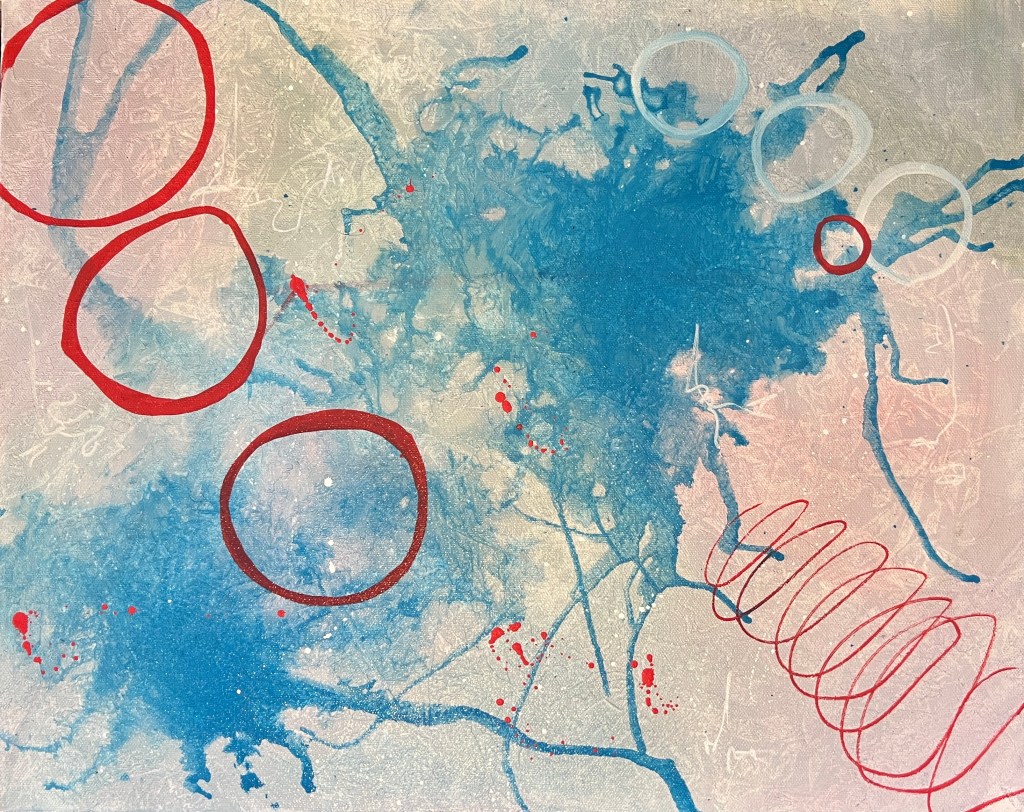
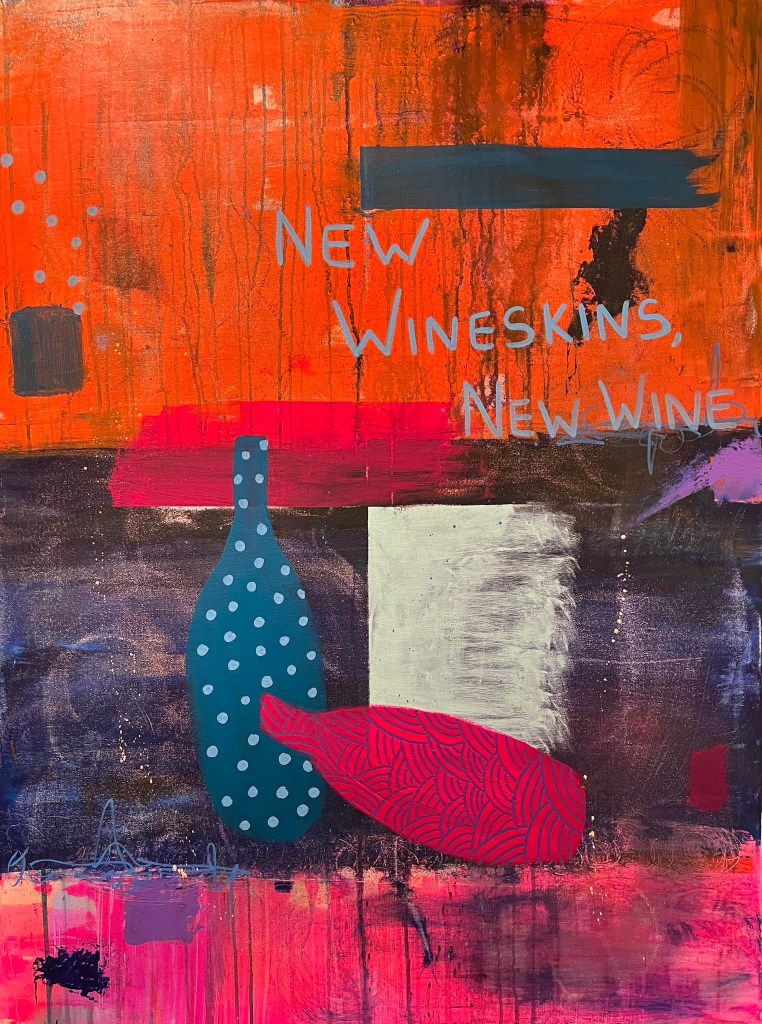
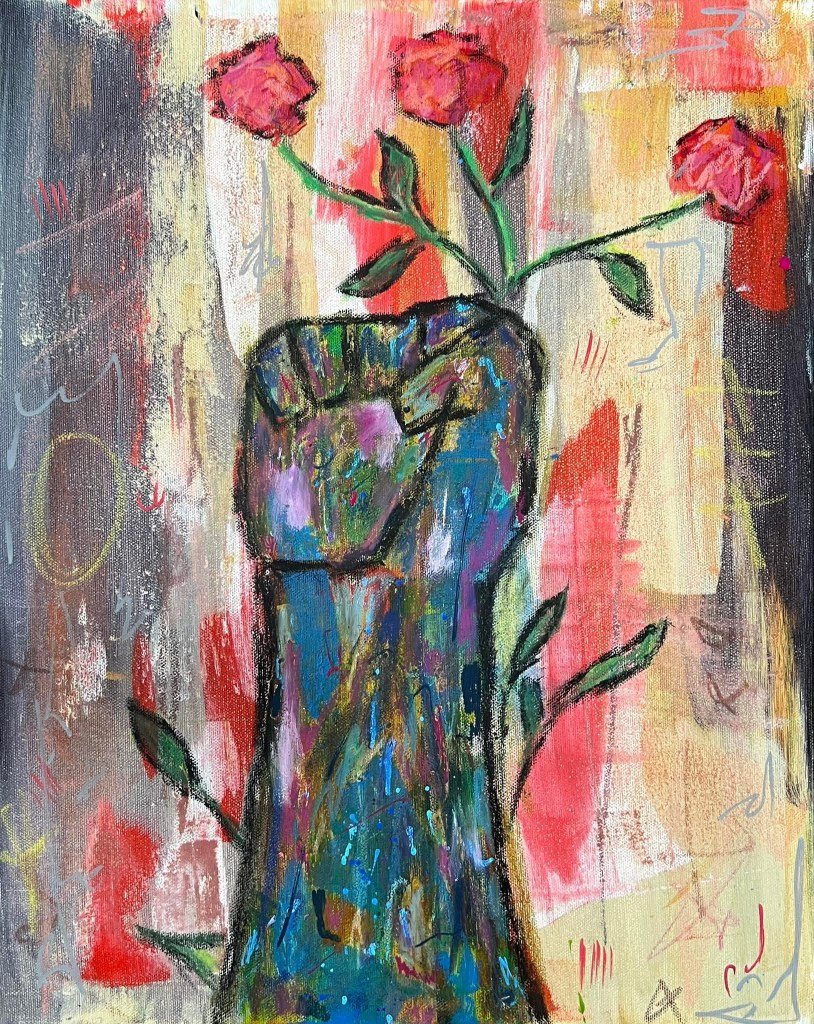
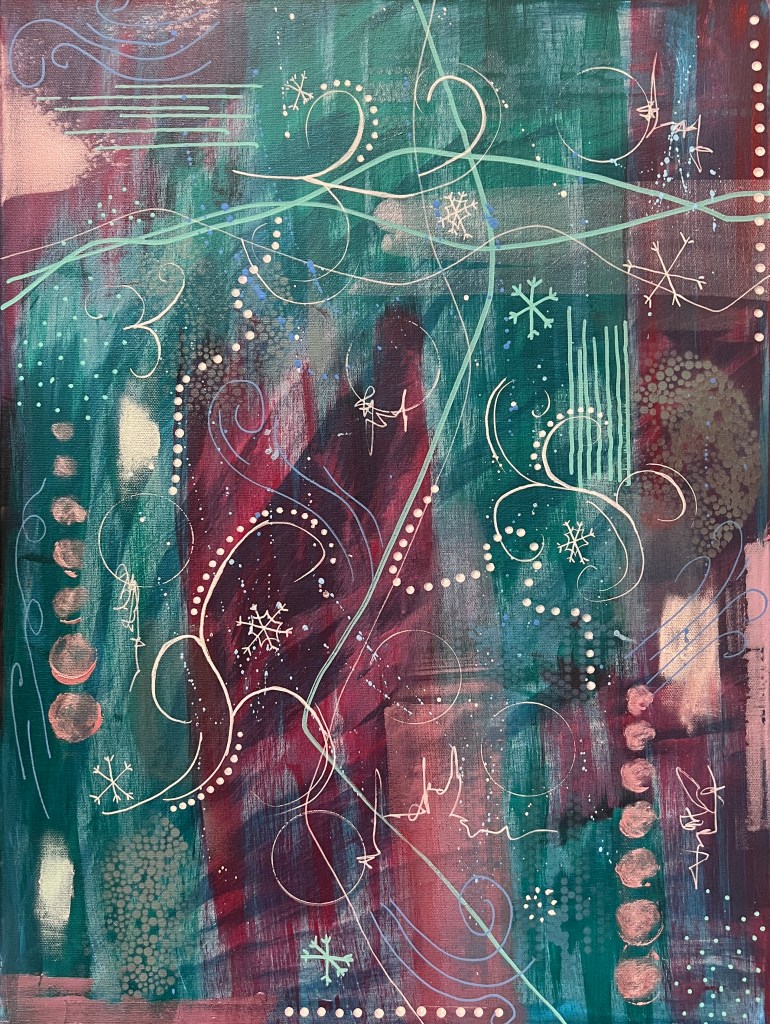
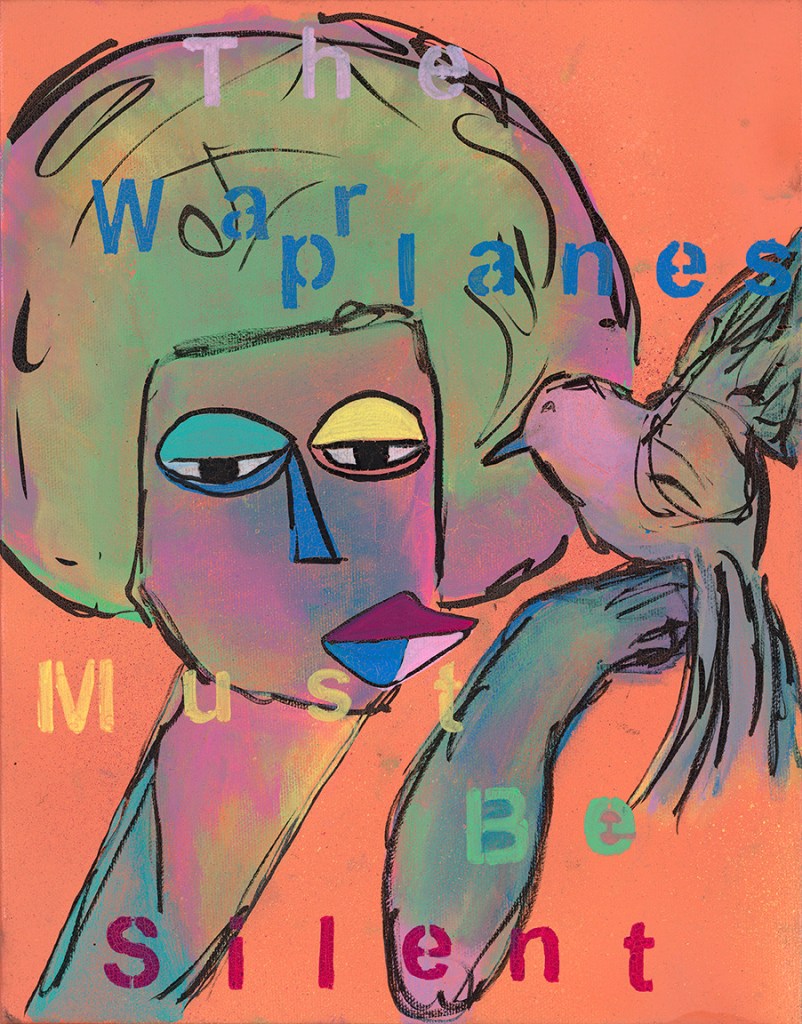
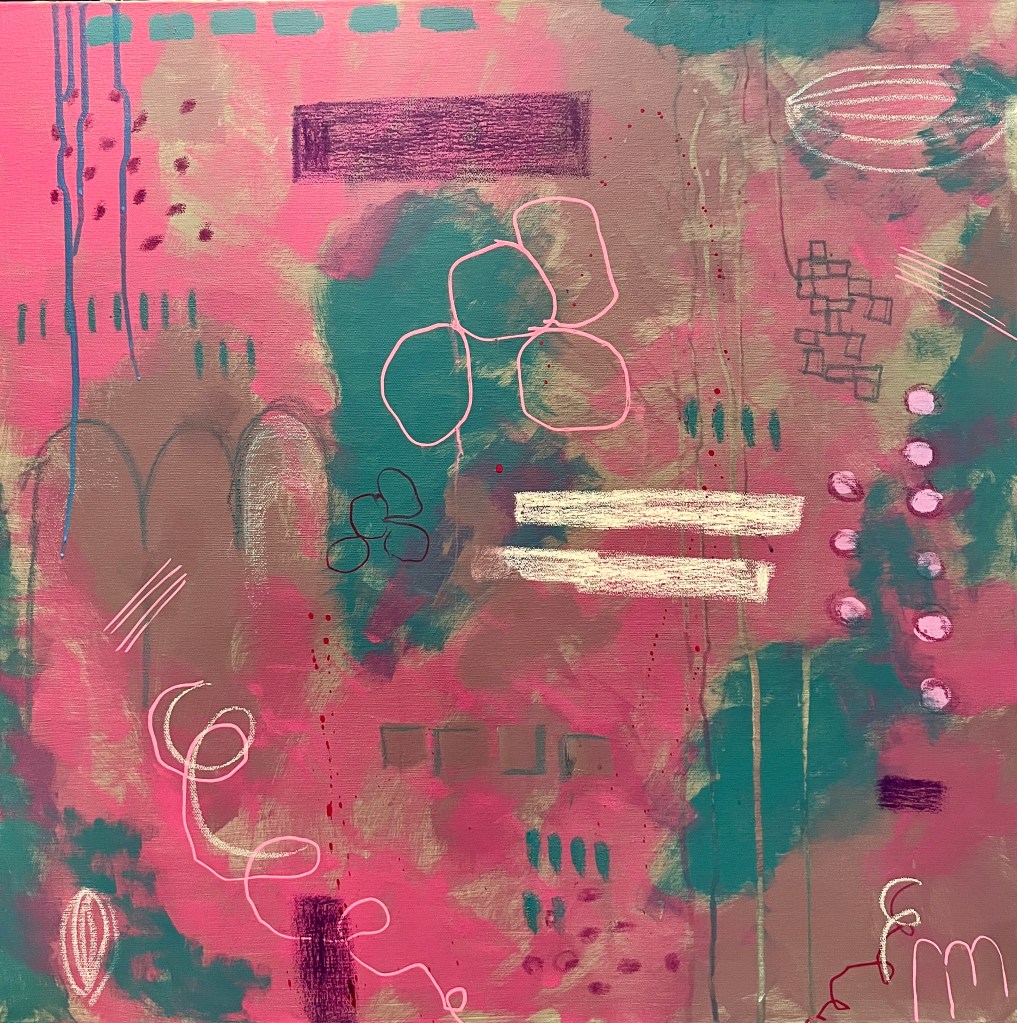





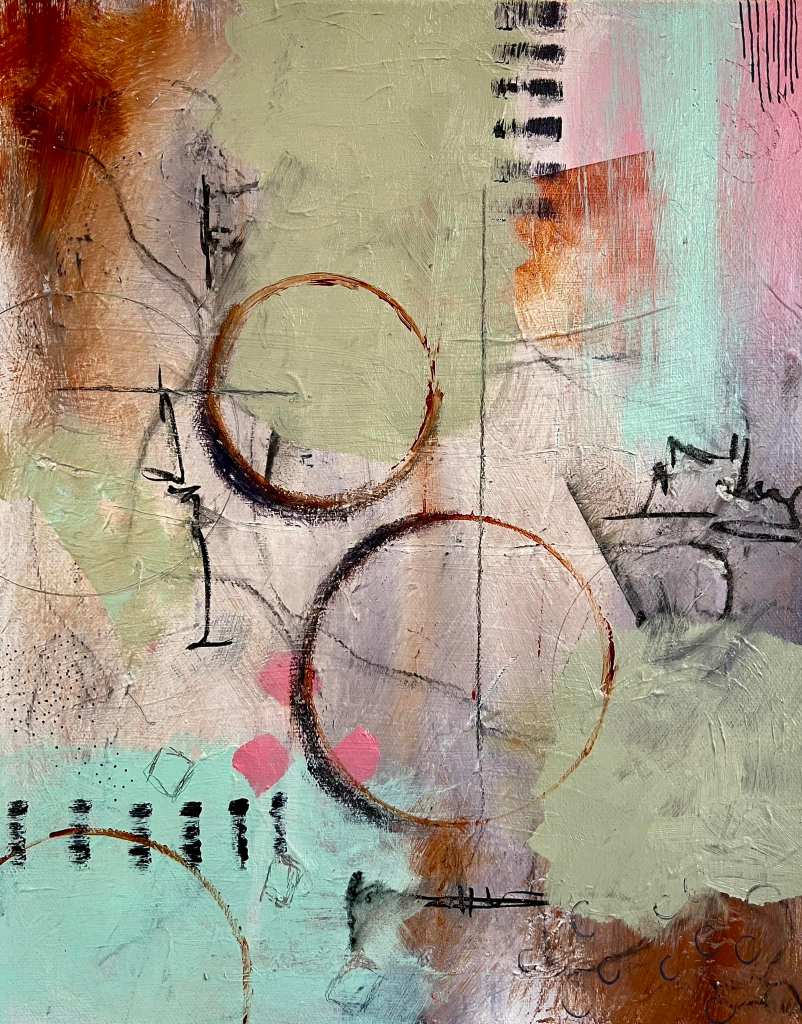
11”x14”
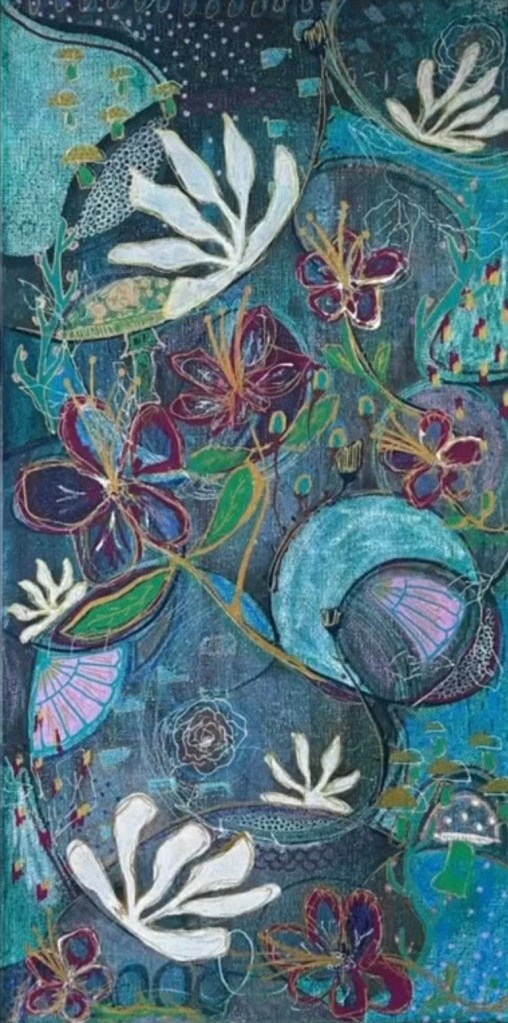
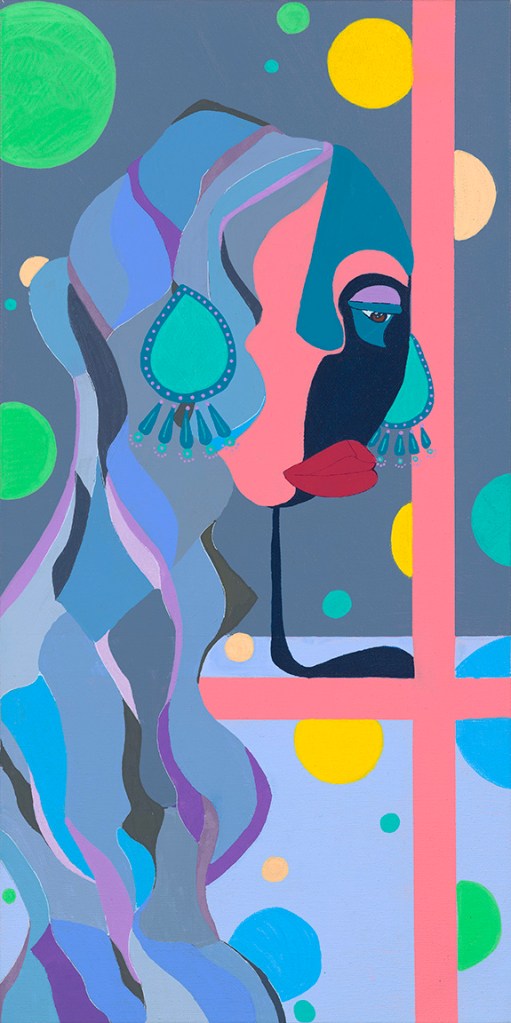
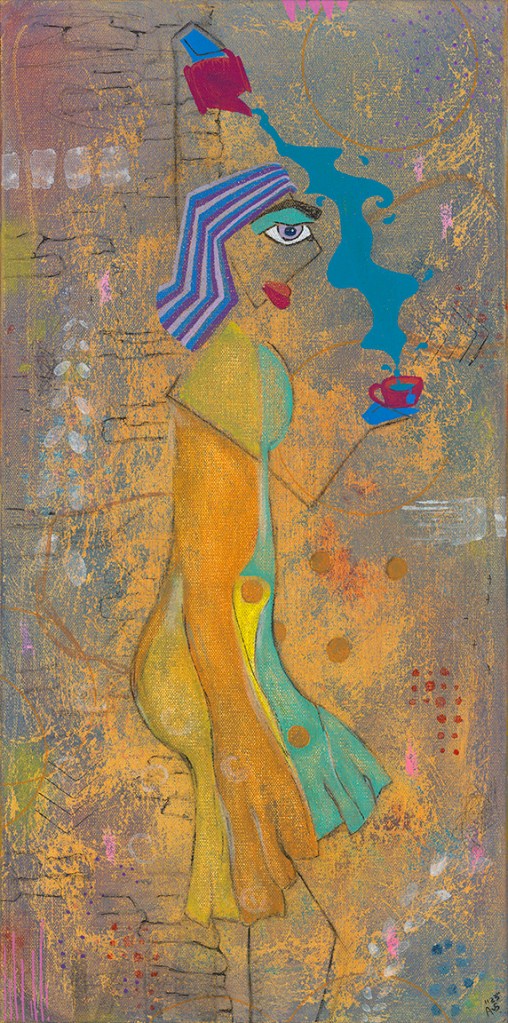
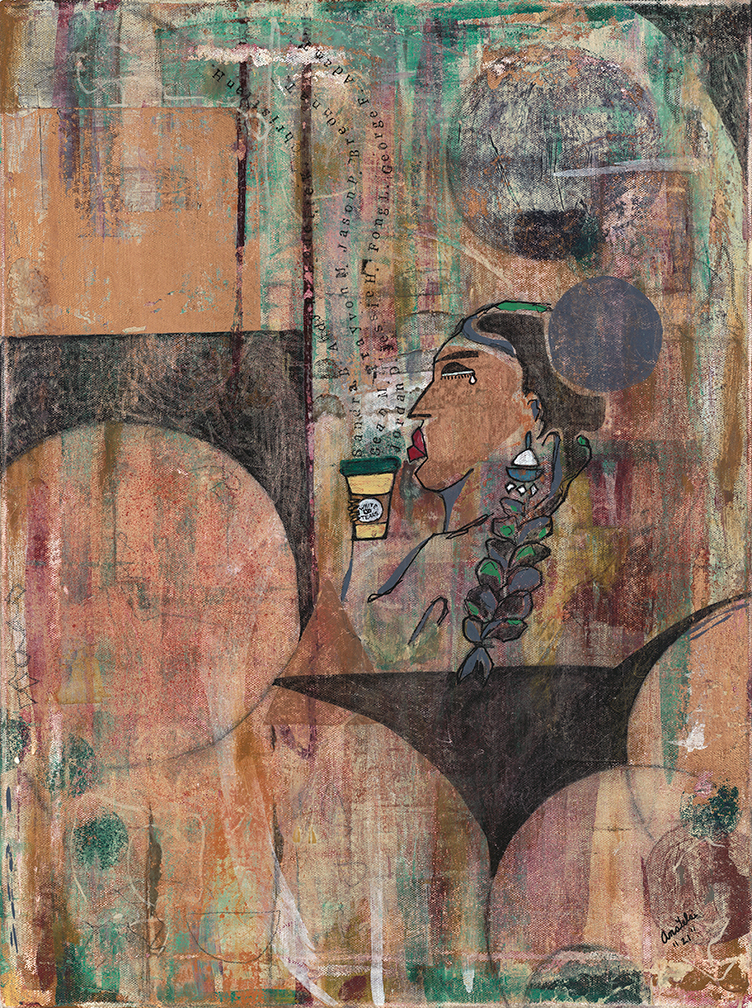
“Chismosa” shows a feminine and empowering practice that has been misunderstood for a long time. The woman in the painting literally engages in the act of “spilling the tea” or gossiping, which has often been seen as negative. “Chismosa,” celebrates the word and its meaning, reclaiming it from its negative connotations and honoring the tradition of women supporting and protecting one another through gossip. From the church pews to the boardroom, many women are familiar with the whispered warnings of other women about which men to trust and which men are dangerous. This protective act is sometimes the only line of defense a disempowered woman may have. To quote Paula Pacheco Soto, “Chismosas, or gossipers, are the aunties, the mothers, las comadres: the women in the neighborhood. They are the everyday characters and matriarchs whose discussion of other people’s lives and actions is a crucial component of their survival. […] chisme is also a transgenerational experience and tradition that serves to create safety and community through secrecy.”
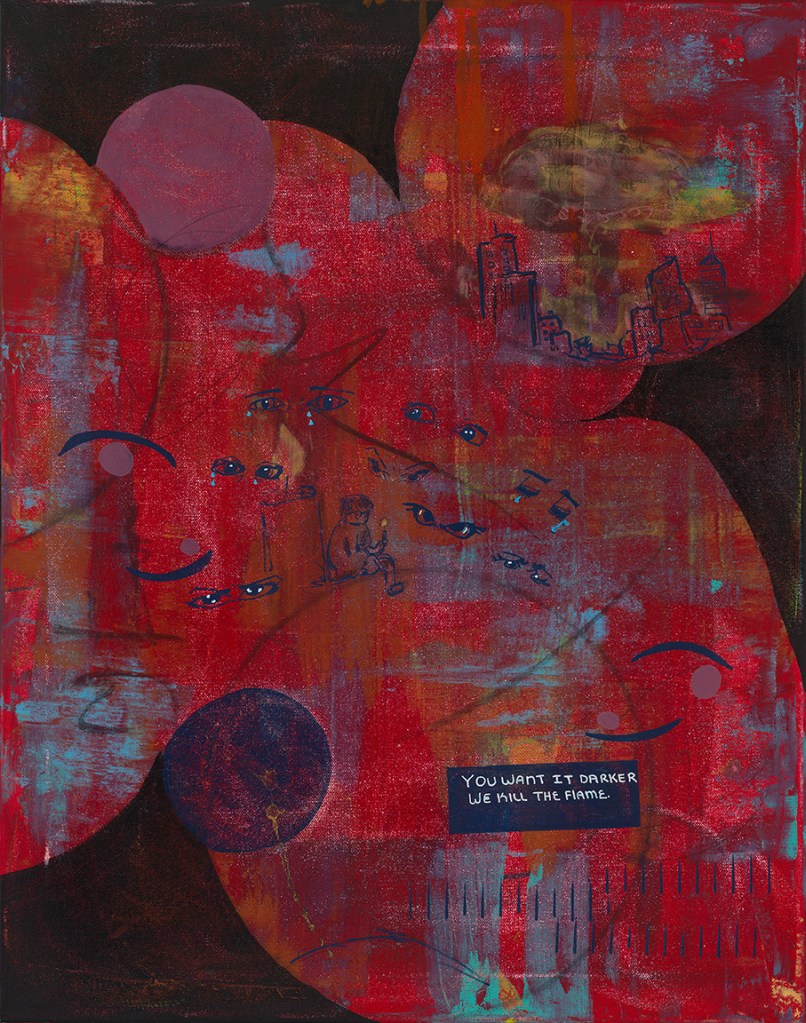
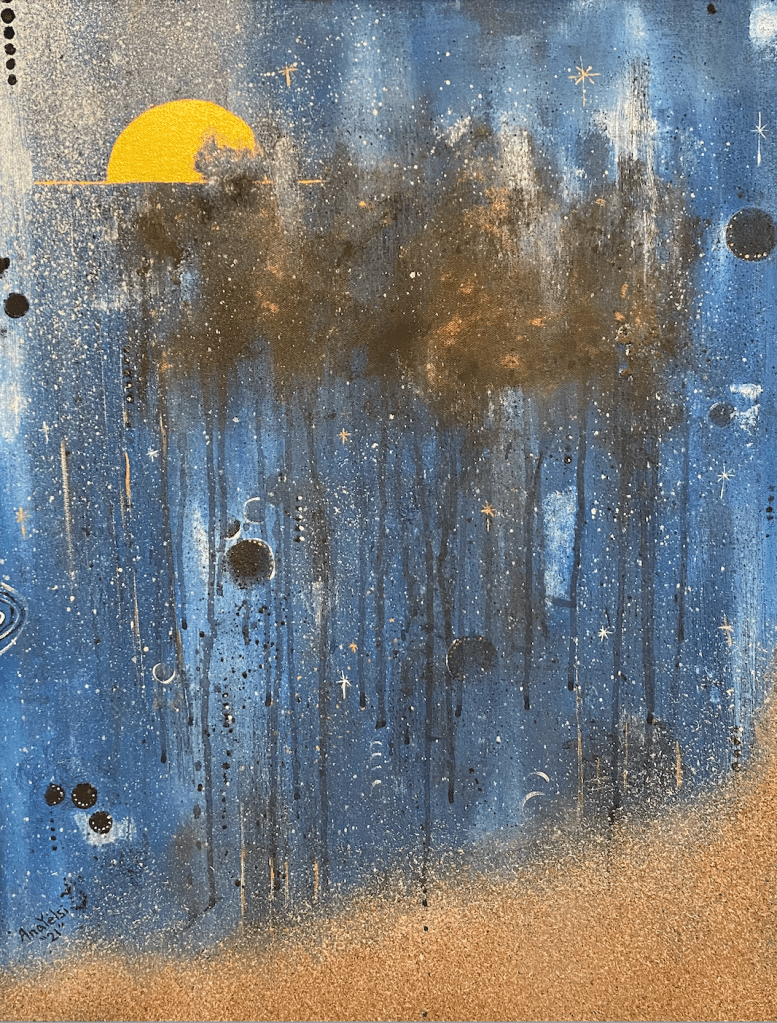
This piece was painted while the artist listened to a collection of Leonard Cohen songs, and contemplated the grief and anger so many of us are feeling in today’s world. The sense of endless darkness, and the questioning of whether we’ve been abandoned by our Creator. This was inspired by his song, “You want it darker”
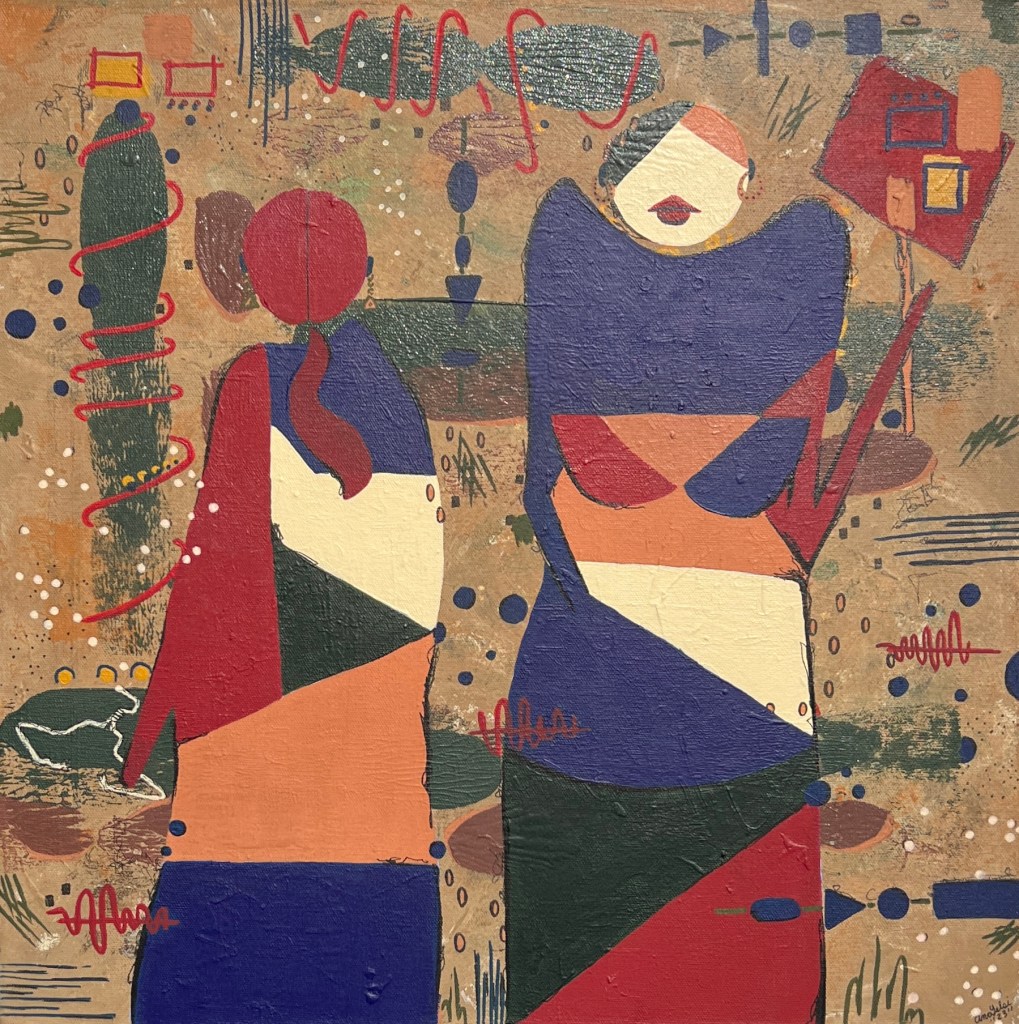
Commissioned by the National Latina Institute For Reproductive Justice to represent the Dobb’s Decision to overturn Roe V. Wade
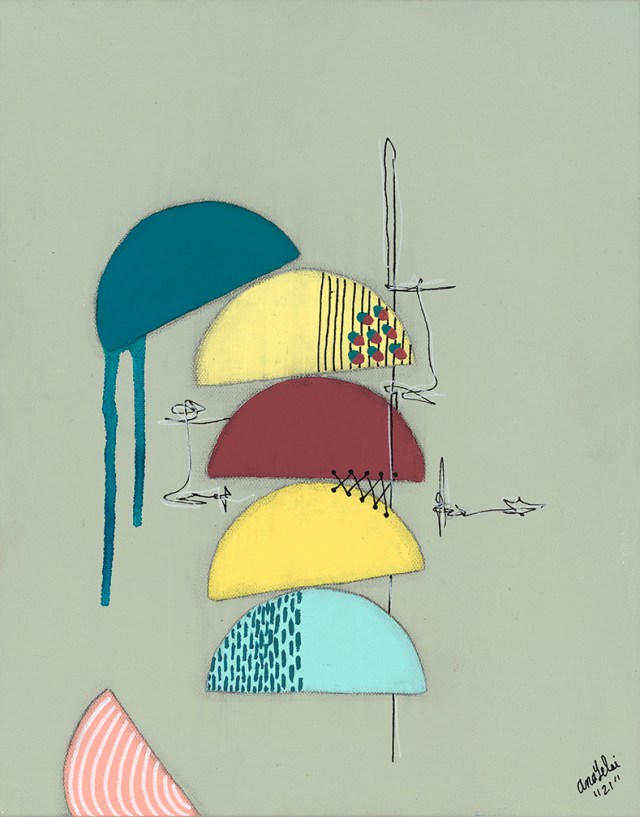
11”x14”
“Equilibrium” depicts the struggle to maintain balance in the face of mental illness or trauma. The sage green background provides a calming effect, while the precariously stacked half circles symbolize the effort that is required to maintain one’s mental well-being. The top half circle in the stack teeters on the edge of falling while the four bottom half circles are only held together by a single needle piercing through all of them from top to bottom, emphasizing the fragility of the stability they represent. Equilibrium encourages viewers to reflect on their own struggles and to seek out the support they need to maintain their own sense of balance and calm.

Commissioned by the National Latina Institute For Reproductive Justice to represent Roe V. Wade passing in 1973